Listen closely because your hunger operates on a deficit and the clock is a relentless predator. We are not here to simmer for hours or engage in the slow-motion tragedy of dry bean hydration. We are here for the high-velocity deployment of Quick Black Bean Tacos. This is culinary infrastructure at its most efficient; a system designed to move from pantry stasis to a piquant, steaming reality in less time than it takes to find a decent podcast. Imagine the scent of toasted cumin colliding with the sharp, acidic snap of fresh lime. Picture the beans, not as a mushy afterthought, but as a textured, savory foundation encased in a warm, charred tortilla. We are leveraging the power of canned legumes through rapid heat transfer and aggressive seasoning. This is about more than just a meal; it is about the structural integrity of your Tuesday night. We are going to infuse flavor into the very core of the bean, render down aromatics until they are translucent, and execute a dinner that defies the laws of temporal physics.
THE DATA MATRIX
| Metric | Specification |
|---|---|
| Prep Time | 2 Minutes |
| Execution Time | 3 Minutes |
| Yield | 4 Servings (8 Tacos) |
| Complexity (1-10) | 2 |
| Estimated Cost per Serving | $1.15 |
THE GATHERS
Ingredient Protocol:
- Legume Base: 2 cans (850g / 30 oz) Black beans, drained and rinsed.
- Aromatic Accelerator: 15ml / 1 tbsp Neutral oil (avocado or grapeseed).
- The Catalyst: 10g / 2 tsp Ground cumin.
- The Heat: 5g / 1 tsp Smoked paprika.
- Acid Component: 30ml / 2 tbsp Fresh lime juice.
- Liquid Medium: 60ml / 0.25 cup Vegetable stock or water.
- Structural Shells: 8 Small corn or flour tortillas.
- Finishing Salts: 5g / 1 tsp Flaky sea salt.
- Garnish Array: 100g / 0.5 cup Pickled red onions, 15g / 0.25 cup Fresh cilantro.
Section A: Ingredient Quality Audit:
The primary failure point in Quick Black Bean Tacos is the "tinny" metallic resonance of low-grade canned beans. If your beans taste like a warehouse, you must perform a vigorous rinse under cold filtered water to strip away the viscous, starchy canning liquid. If your spices are more than six months old, they have likely lost their volatile oils. The fix is a thermal activation; toast your spices in a dry pan for 30 seconds before adding oil to awaken the dormant aromatic compounds. Finally, if your tortillas are brittle, they lack moisture. Wrap them in a damp lint-free towel and microwave for 20 seconds to re-plasticize the starches before charring.
THE MASTERCLASS

Step-by-Step Execution:
1. Thermal Priming and Aromatic Bloom
Set your saucier or heavy-bottomed skillet over medium-high heat. Add the neutral oil and wait for it to shimmer, indicating a drop in viscosity. Drop in the cumin and smoked paprika. Use a silicone spatula to stir constantly for 30 seconds.
Pro Tip: This process, known as blooming, dissolves the fat-soluble flavor compounds in the spices into the oil. This ensures a uniform distribution of flavor rather than gritty pockets of dry powder.
2. Legume Integration and Hydration
Dump the rinsed black beans into the pan. They should sizzle immediately. Add your vegetable stock or water. Use your digital scale to ensure precise liquid ratios if you are doubling the batch.
Pro Tip: The liquid acts as a heat transfer medium. As it evaporates, it forces the infused oils into the porous exterior of the beans, creating a deeply seasoned profile in a fraction of the usual time.
3. Mechanical Texturizing
Take a bench scraper or the back of a heavy spoon and crush approximately 20 percent of the beans against the side of the pan. Stir this mash back into the whole beans.
Pro Tip: Crushing the beans releases internal starches which act as a natural thickener. This creates a creamy, viscous sauce that binds the whole beans together, preventing them from tumbling out of the taco shell.
4. Acidic Brightening and Finishing
Remove the pan from the heat. Squeeze the fresh lime juice directly over the beans and stir. This is the "brightening" phase where the citric acid cuts through the earthy density of the legumes.
Pro Tip: Always add acid at the end of the cooking process. High heat can mute the bright, top-note flavors of citrus; off-heat integration preserves the piquant punch required for a balanced taco.
5. Tortilla Carbonization
While the beans rest for 60 seconds, place your tortillas directly over a gas flame or on a hot dry griddle. Use metal tongs to flip them every 10 seconds until charred spots appear.
Pro Tip: This is the Maillard reaction in action. The charring of the sugars in the tortilla provides a smoky contrast to the savory bean filling, elevating the structural component from a mere wrapper to a flavor contributor.
Section B: Prep & Timing Fault-Lines:
The most common human error is the "Cold Core" syndrome. If you add beans directly from a cold can into a lukewarm pan, the center of the bean remains at room temperature while the outside overcooks. Ensure your pan is at the Leidenfrost point (where a drop of water beads and dances) before adding ingredients. Another fault-line is the "Soggy Shell." If you load the beans while they are too liquid, the tortilla will disintegrate. Ensure you have reduced the liquid until the beans are coated in a thick glaze, not sitting in a soup.
THE VISUAL SPECTRUM
Section C: Thermal & Visual Troubleshooting:
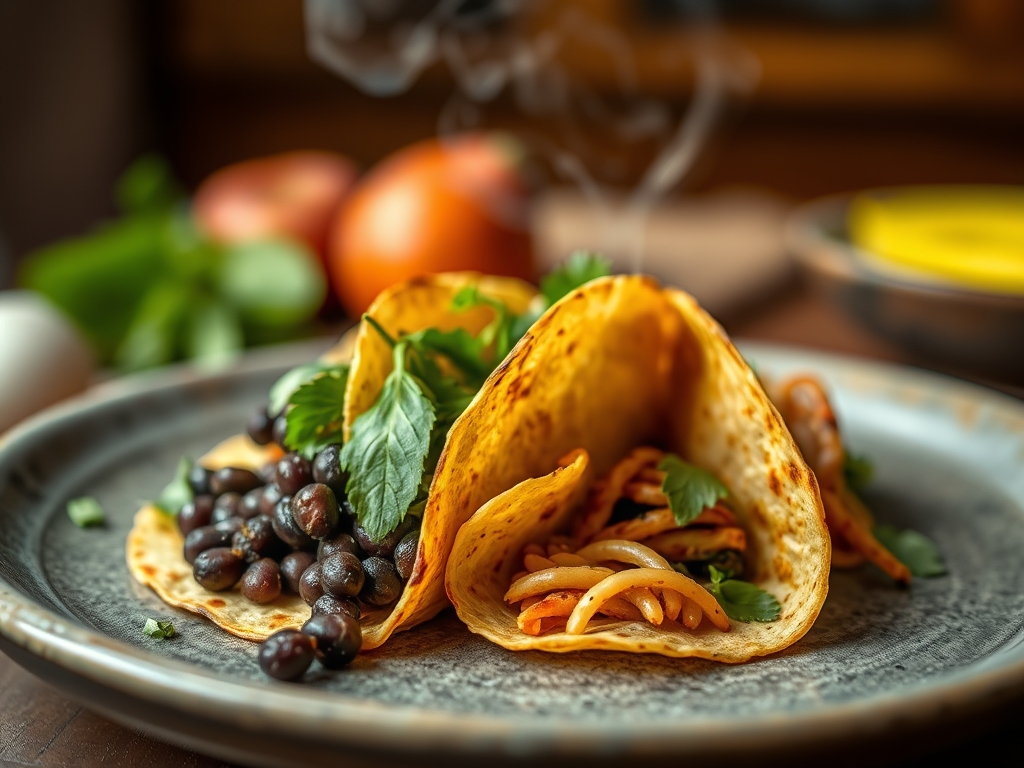
Look at the Masterclass photo above. Notice the glossy sheen on the beans; that is the result of proper emulsification between the bean starches and the oil. If your beans look matte or dusty, you have not added enough liquid or fat. The color should be a deep, midnight purple-black, not a faded grey. Grey beans indicate over-rinsing or low-quality canning. If your garnishes look limp, shock your cilantro in ice water for 60 seconds to aerate the cell walls and restore turgor pressure. The visual goal is a high-contrast palette: dark beans, bright green cilantro, and neon-pink pickled onions.
THE DEEP DIVE
Macro Nutrition Profile:
Per two-taco serving, you are looking at approximately 340 calories. This includes 14g of protein, 12g of fiber (a massive win for gut motility), and 8g of healthy fats. The glycemic index remains low due to the high fiber content of the black beans, providing sustained energy release without the insulin spike associated with refined fast foods.
Dietary Swaps (Vegan/Keto/GF):
This recipe is inherently vegan. For Gluten-Free (GF) requirements, ensure your corn tortillas are certified 100 percent nixtamalized corn. For Keto adherents, swap the tortillas for large butter lettuce leaves or a "taco bowl" format using cauliflower rice, as the beans themselves are moderate in carbohydrates.
Meal Prep & Reheating Science:
To maintain molecular structure during reheating, do not use a microwave at full power, as it toughens the bean skins. Instead, use a stovetop with an additional 15ml of water to re-hydrate the starches. If you must use a microwave, cover the vessel with a damp paper towel to create a localized steam chamber.
THE KITCHEN TABLE
How do I make the beans creamier without more fat?
Increase the "mash ratio." By crushing 40 percent of the beans instead of 20 percent, you release more internal starches. These starches emulsify with the cooking liquid to create a rich, velvety texture without adding extra oil or dairy.
Can I use dried beans for this 5-minute method?
Negative. Dried beans require a minimum of 45 minutes in a high-pressure environment. For the 5-minute infrastructure to hold, high-quality canned beans are a non-negotiable requirement. Efficiency is the priority in this specific protocol.
My tacos taste flat; what am I missing?
You are likely lacking salt or acid. Increase the lime juice or add a pinch of MSG. Salt enhances flavor, but acid provides the "lift" that makes the earthy flavors of the black beans resonate on the palate.
What is the best way to store leftovers?
Store the bean component in an airtight glass container for up to five days. Do not store pre-assembled tacos, as the moisture migration from the beans will compromise the structural integrity of the tortillas within minutes.