Listen to the sound of high-velocity air colliding with starch. It is the roar of a culinary engine redlining at four hundred degrees. We are not just cooking; we are engineering a structural transformation that turns a humble tuber into a golden, glass-shattering masterpiece. The goal is simple yet elusive: Air Fryer French Fries that possess a fluffy, cloud-like interior and a shell so crisp it echoes. Forget the soggy, oil-laden disappointment of traditional deep frying. We are leveraging rapid convection to dehydrate the surface moisture while simultaneously initiating the Maillard reaction. This is a race against time and humidity. You have fifteen minutes to achieve perfection before the internal steam compromises the structural integrity of the crust. This is high-stakes snacking for the modern age. We are optimizing heat transfer, managing surface area, and ensuring that every millimeter of the potato is subjected to the same aggressive thermal environment. If you want mediocre fries, go to a drive-thru. If you want a masterclass in texture, prepare for the audit.
THE DATA MATRIX
| Metric | Specification |
|---|---|
| Prep Time | 5 Minutes |
| Execution Time | 15 Minutes |
| Yield | 2 Servings |
| Complexity (1-10) | 3 |
| Estimated Cost per Serving | $0.45 |
THE GATHERS
Ingredient Protocol:
- 500g / 2 Large Russet Potatoes (High starch content is non-negotiable).
- 15ml / 1 tbsp Extra Virgin Olive Oil or Avocado Oil.
- 5g / 1 tsp Fine Sea Salt.
- 2g / 0.5 tsp Smoked Paprika (for color and depth).
- 1g / 0.25 tsp Garlic Powder (to infuse the surface with aromatics).
Section A: Ingredient Quality Audit:
The primary failure point in this operation is the potato variety. Waxy potatoes like Red Bliss or Yukon Gold contain too much sugar and moisture; they will burn before they crisp. Use Russets. If your potatoes have started to sprout, the starch has begun converting to sugar, which results in a muddy, bitter flavor profile. If you are stuck with older tubers, soak them in an ice bath for ten minutes to render out excess surface sugars. Furthermore, ensure your oil is fresh. Rancid oil will oxidize under high heat, creating a viscous, unpleasant film on the palate rather than a clean crunch.
THE MASTERCLASS
1. The Precision Cut
Utilize a sharp chef knife or a mandoline to slice the potatoes into 1cm batons. Consistency is the cornerstone of even heat distribution. Use a bench scraper to move your cut fries efficiently from the cutting board to a mixing bowl without bruising the delicate starch cells.
Pro Tip: Uniformity ensures that every fry reaches the peak of dehydration at the exact same moment. Varying thickness leads to a mix of burnt tips and raw centers.
2. The Surface Preparation
Pat the potatoes dry using lint-free towels. Any residual surface moisture will turn into steam, which is the enemy of the crunch. Once dry, toss the fries in a large bowl with your oil and spices. Ensure every baton is coated in a thin, viscous layer of lipids to facilitate heat transfer.
Pro Tip: Use a digital scale to measure your oil. Over-oiling leads to a soggy product; under-oiling prevents the Maillard reaction from accelerating.
3. The Thermal Blast
Preheat your air fryer for three minutes. Arrange the fries in the basket, ensuring they are not overcrowded. Overcrowding inhibits air circulation, leading to uneven browning. Set the device to 200C (400F) and initiate the cycle.
Pro Tip: Convection relies on the "air-flow-to-surface-area" ratio. If you stack the fries, you are essentially steaming them in their own juices.
4. The Agitation Phase
At the seven-minute mark, remove the basket and give it a vigorous shake. This re-positions the fries and ensures that the contact points with the basket are rotated. This is where you will see the first signs of the golden hue emerging.
Pro Tip: Use a pair of silicone-tipped tongs to aerate the pile if they seem to be sticking together.
5. The Final Dehydration
Continue the cycle for the remaining eight minutes. Monitor the color closely. You are looking for a deep, amber gold. Once the timer expires, immediately transfer the fries to a wire rack.
Pro Tip: Resting fries on a flat plate causes "bottom-side sweating" as the internal steam escapes and softens the underside. A wire rack maintains the integrity of the crust.
Section B: Prep & Timing Fault-Lines:
The most common human error is the "Cold Start." Putting fries into a cold air fryer results in a slow temperature ramp-up, which allows the interior to overcook before the exterior crisps. Always preheat. If your fries are browning too fast, your air fryer's calibration might be off. Lower the temp by 10 degrees and extend the time. If they are pale and limp after 15 minutes, you likely overcrowded the basket or used too much oil.
THE VISUAL SPECTRUM
Section C: Thermal & Visual Troubleshooting:
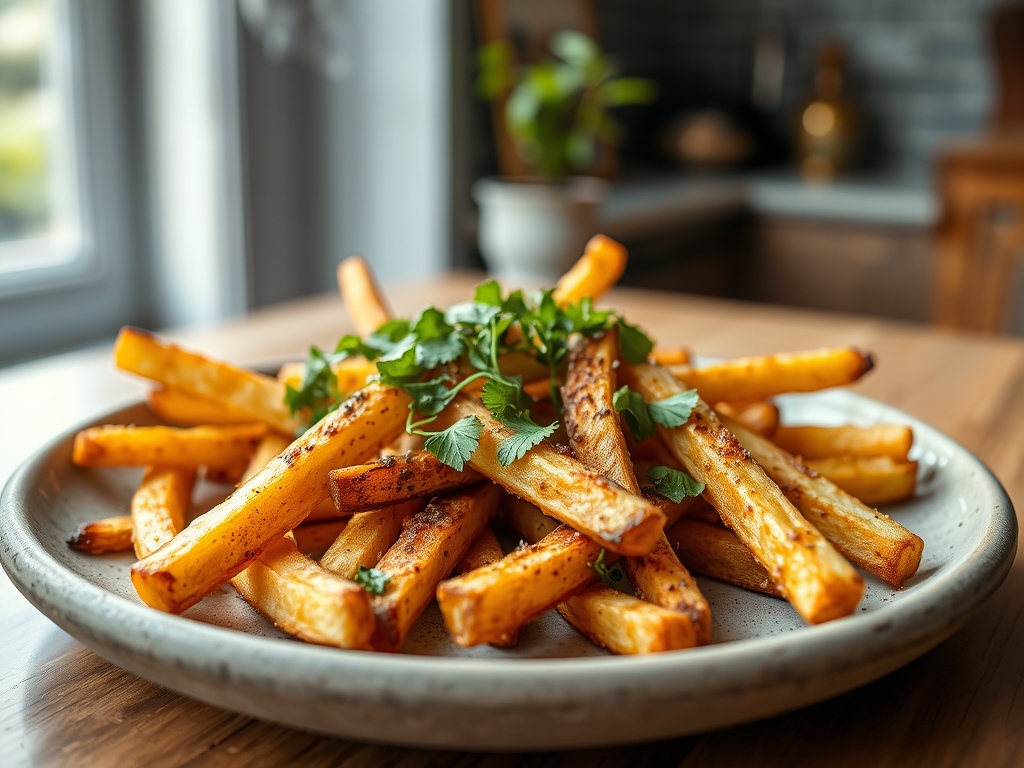
Look at the Masterclass photo. Notice the micro-blisters on the surface of the fries. This is the visual cue for a successful starch dehydration. If your fries look "matte" or dull, you likely skipped the oil coating or used a low-starch potato. If the ends are black but the centers are white, your cut was too thin for the high-heat setting. A perfect fry should have a piquant aroma and a variegated golden-brown color. If the color is uneven, it indicates you did not shake the basket with enough vigor at the halfway point.
THE DEEP DIVE
Macro Nutrition Profile
Per serving (approx 250g): 220 Calories, 7g Fat, 38g Carbohydrates, 4g Fiber, 4g Protein. By using the air fryer, you reduce the fat content by nearly 70% compared to traditional deep-fat immersion.
Dietary Swaps
- Vegan: Naturally compliant. Ensure your seasoning salt does not contain dairy-derived anti-caking agents.
- Keto: Replace Russets with Daikon radish or Jicama. Note that these require a higher temperature to render moisture.
- Gluten-Free: Naturally compliant. Avoid "pre-seasoned" frozen fries which often use wheat starch as a coating.
Meal Prep & Reheating Science
To maintain molecular structure when reheating, never use a microwave. The microwave agitates water molecules, causing the internal steam to collapse the starch walls. Instead, return the fries to the air fryer at 180C for 3 minutes to re-crisp the exterior lipids.
THE KITCHEN TABLE
Why are my fries soggy even after 15 minutes?
You likely overcrowded the basket. This creates a high-humidity microclimate that steams the potatoes instead of frying them. Cook in smaller batches to ensure maximum air-to-surface contact for that essential crunch.
Do I really need to soak the potatoes?
For a 15-minute "Rapid" protocol, soaking is optional if using high-quality Russets. However, if you have an extra ten minutes, a cold-water soak removes excess surface starch, leading to a cleaner, more defined "snap" when you bite in.
Can I use spray oil instead of bottled oil?
Yes, but be cautious. Many aerosol sprays contain lecithin which can leave a gummy residue on your air fryer basket over time. A simple pump-action mister with pure avocado oil is the superior professional choice.
Why did my spices burn and turn bitter?
Fine powders like dried onion or garlic can scorch at 200C. If you prefer a heavy spice profile, toss the fries in the seasoning during the last two minutes of cooking rather than at the start.