Open the pantry and witness the cold, metallic reality of the modern survivalist. You are staring at a stack of tin cans, but I see a high speed architectural challenge. We are not just making lunch; we are executing a Quick Tuna Salad with the precision of a Swiss watchmaker and the soul of a Neapolitan street vendor. Forget the soggy, over-dressed disasters of your childhood cafeteria. We are targeting a specific molecular balance where the brine meets the fat. The goal is a texture that is simultaneously light and substantial, a profile that hits the back of the palate with a piquant zing before settling into a savory, umami-rich finish. This is about infrastructure. It is about the structural integrity of the celery against the yielding flakes of the fish. It is about the emulsification of the dressing so it clings rather than pools. We are building a protein powerhouse in three hundred seconds. Grab your opener; the audit of your culinary efficiency begins now.
THE DATA MATRIX
| Metric | Specification |
|---|---|
| Prep Time | 3 Minutes |
| Execution Time | 2 Minutes |
| Yield | 2 Servings |
| Complexity (1-10) | 2 |
| Estimated Cost per Serving | $1.85 |
THE GATHERS
Ingredient Protocol:
- 2 cans (approx. 284g / 10 oz) Albacore or Skipjack tuna in water.
- 60ml / 0.25 cup High-quality avocado oil mayonnaise.
- 15ml / 1 tbsp Dijon mustard for a piquant kick.
- 50g / 0.5 cup Finely diced celery for structural crunch.
- 30g / 0.25 cup Red onion, minced and rinsed.
- 5ml / 1 tsp Fresh lemon juice to brighten the lipid profile.
- 2g / 0.5 tsp Cracked black pepper.
- 1g / 0.25 tsp Smoked paprika to infuse a subtle depth.
Section A: Ingredient Quality Audit:
If your tuna arrives as a mushy, unrecognizable paste, you have failed at the procurement stage. Look for "solid white" or "chunk" varieties to ensure the muscle fibers remain intact. If the fish tastes overly metallic, a quick rinse in a fine-mesh sieve followed by a pat-down with a lint-free towel will reset the flavor profile. If your red onion is too aggressive, soak the minced pieces in ice water for sixty seconds to render the sulfurous compounds inert. This ensures the onion provides crunch without a lingering afterburn that ruins your afternoon meetings.
THE MASTERCLASS
Step 1: The Drainage Protocol
Place your tuna into a stainless steel colander or use the lid-press method to evacuate every drop of excess moisture. Any residual water will prevent the mayonnaise from adhering to the protein.
Pro Tip: Use a digital scale to ensure you have exactly the weight required for the ratio; moisture content varies by brand, and excess liquid will break your emulsion.
Step 2: The Aromatic Foundation
On a heavy-duty cutting board, mince your celery and onions into a uniform 3mm dice. Consistency here is not just for aesthetics; it ensures a predictable mouthfeel in every bite.
Pro Tip: Use a bench scraper to transfer your aromatics into the mixing bowl to prevent bruising the delicate cell walls of the vegetables.
Step 3: The Emulsion Integration
In a small saucier or mixing bowl, whisk the mayonnaise, Dijon, and lemon juice until the mixture is viscous and glossy. This creates a stable base before the solids are introduced.
Pro Tip: Whisking the dressing separately allows you to aerate the fat, creating a lighter texture that coats the tuna more efficiently than adding ingredients one by one.
Step 4: The Fold and Season
Add the drained tuna to the dressing. Using a silicone spatula, gently fold the mixture. Do not overwork the fish; you want defined flakes, not a homogenized paste.
Pro Tip: Use a microplane to zest a hint of lemon over the top at the final second to infuse the salad with volatile citrus oils that hit the nose before the tongue.
Section B: Prep & Timing Fault-Lines:
The most common failure in a Quick Tuna Salad is the temperature spike. If your ingredients are room temperature, the fats in the mayonnaise will lose their grip and become oily. Always chill your tuna cans for at least two hours before the audit. If you are in a rush, place the mixing bowl in a larger bowl filled with ice (a bain-marie in reverse) to keep the thermal energy low while you work.
THE VISUAL SPECTRUM
Section C: Thermal & Visual Troubleshooting:
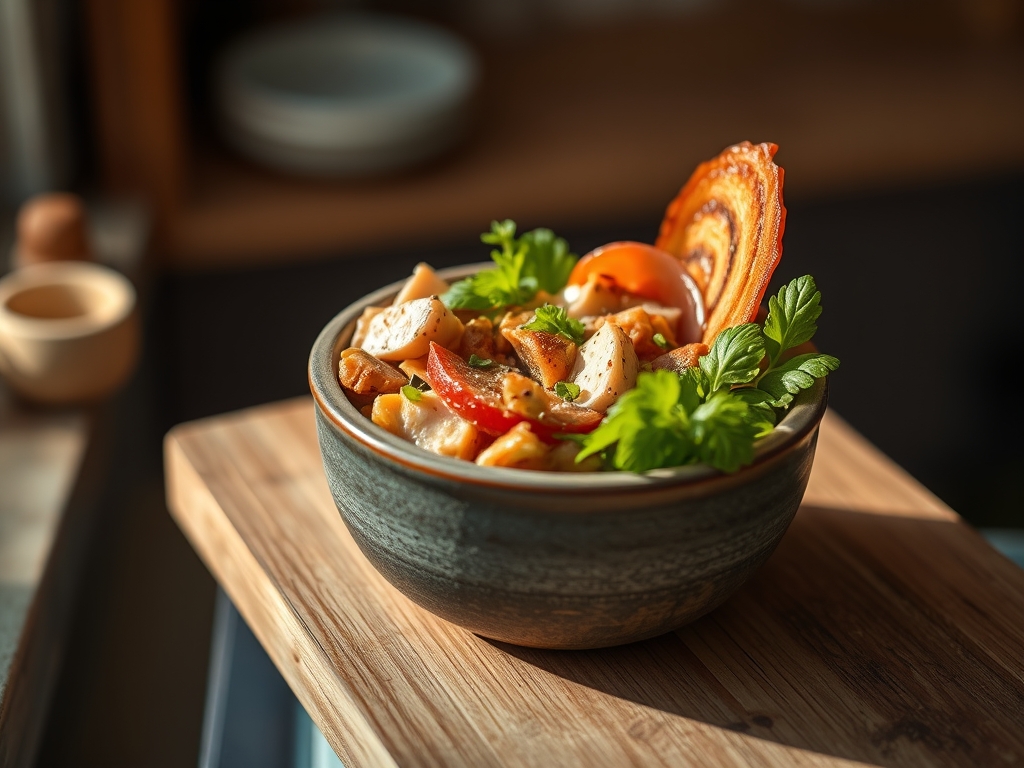
Look at the reference photo above. Note the distinct separation of the pink-hued tuna flakes and the vibrant green of the celery. If your salad looks like a grey, monolithic blob, you have over-mixed. If the dressing appears broken or "weeping" liquid, your tuna was not drained sufficiently. The visual cue for success is a "matte-gloss" finish; the salad should shine slightly from the fats but should not have pools of oil or water at the bottom of the bowl. If the colors are dull, increase your paprika or add fresh parsley to provide a visual contrast that signals freshness to the brain.
THE DEEP DIVE
Macro Nutrition Profile:
A standard serving of this infrastructure-grade salad provides approximately 32g of protein, 14g of healthy fats (if using avocado-based mayo), and less than 3g of carbohydrates. It is a dense, efficient fuel source designed for high-output individuals.
Dietary Swaps:
- Vegan: Swap the tuna for mashed chickpeas and the mayo for a silken-tofu based dressing.
- Keto: The base recipe is already keto-compliant; serve in a hollowed-out bell pepper for extra fiber.
- GF: Ensure your mustard is certified gluten-free, as some brands use wheat-based thickeners.
Meal Prep & Reheating Science:
Never reheat tuna salad. The heat will cause the fish oils to oxidize, resulting in a "fishy" odor that is socially unacceptable in an office environment. For meal prep, store the tuna and the dressing in separate compartments of a vacuum-sealed container. This prevents the vegetables from losing their water content through osmosis, which would otherwise turn your salad into a soggy mess by day two.
THE KITCHEN TABLE
How do I make it less "fishy"?
Acid is your primary tool. Increase the lemon juice or add a teaspoon of caper brine. The acid neutralizes the amines responsible for the scent, resulting in a cleaner, brighter flavor profile.
Can I use Greek yogurt instead of mayo?
Yes, but the acidity will increase. Balance this by reducing the lemon juice. Note that yogurt is less viscous, so your salad may require more refrigeration time to set properly.
Why is my tuna salad watery the next day?
This is caused by osmosis. Salt in the dressing draws water out of the celery and onions. To prevent this, salt your vegetables ten minutes before mixing, pat them dry, and then proceed with the assembly.
What is the best way to serve this for a crowd?
Utilize a ring mold to stack the tuna salad on a bed of microgreens. This adds verticality and professional flair to an otherwise humble, shelf-stable protein source.