Listen to that sound. It is not just a sizzle; it is the high-frequency vibration of moisture rapidly evacuating a protein matrix. We are operating in the high-stakes environment of the ten-minute window. When you are executing 10 Minute Beef Sliders, you are not just cooking; you are managing a thermodynamic event. The goal is a violent Maillard reaction on the exterior while maintaining a succulent, medium-rare core. This requires an uncompromising audit of your thermal surface and fat distribution. Most amateur cooks fail because they treat heat as a static setting rather than a dynamic variable. We are here to optimize the kinetic energy of your cast iron. We want that deep, mahogany crust that signals a complex breakdown of amino acids and sugars. We want the fat to render instantly, bathing the meat in its own liquefied flavor. Forget the leisurely pace of a Sunday roast. This is a sprint. This is technical precision. This is the audit of the perfect bite.
THE DATA MATRIX
| Metric | Specification |
|---|---|
| Prep Time | 4 Minutes |
| Execution Time | 6 Minutes |
| Yield | 4 Servings (12 Sliders) |
| Complexity (1-10) | 4 |
| Estimated Cost per Serving | $3.50 |
THE GATHERS
Ingredient Protocol:
- 680g / 1.5 lbs Ground Chuck (80/20 lean-to-fat ratio)
- 12 units Brioche Slider Buns
- 150g / 5.3 oz Sharp Cheddar, thinly sliced
- 60ml / 4 tbsp Unsalted Butter, clarified
- 15ml / 1 tbsp Neutral Oil (High smoke point)
- 10g / 2 tsp Kosher Salt
- 5g / 1 tsp Coarsely Ground Black Pepper
- 30ml / 2 tbsp Dijonnaise (for a piquant finish)
Section A: Ingredient Quality Audit:
If your beef looks gray or leached of moisture, your protein-to-water ratio is compromised. Sub-par grocery store beef often contains "pink slime" or excessive water injections. The fix: Aerate the meat by gently breaking it apart with a fork before forming patties; do not compress it into a dense puck. If your buns feel stale, do not discard them. A quick steam or a heavy application of clarified butter during the toast phase will re-gelatinize the starches and restore elasticity. If your cheese refuses to melt into a viscous velvet, it likely contains anti-caking agents like cellulose. Always grate from a block for superior lipid integration.
THE MASTERCLASS
Step-by-Step Execution:
1. Thermal Calibration and Surface Prep
Place your heavy-bottomed skillet or carbon steel pan over high heat. Add the neutral oil. You are looking for the "shimmer" phase, just before the smoke point. While the pan heats, use a digital scale to portion the beef into 55g (2 oz) spheres. Do not overwork the meat.
Pro Tip: Using a heavy pan ensures high thermal mass. When the cold meat hits the surface, the temperature drop is minimized, allowing for an immediate sear rather than a slow steam.
2. The Compression Phase
Place the beef spheres into the pan. Use a heavy bench scraper or a flat spatula to smash them down until they are roughly 1/2 inch thick. Season aggressively with salt and pepper immediately.
Pro Tip: Smashing the meat increases the surface area in contact with the heat. This maximizes the Maillard reaction, creating a higher ratio of "crust" to "interior" which is essential for 10 Minute Beef Sliders.
3. The Flip and Embellish
After 90 seconds, use your spatula to scrape under the patty, ensuring you lift the entire crust. Flip the meat. Immediately place the cheddar slices on top. Cover the pan with a lid for 30 seconds to infuse the cheese with steam and accelerate the melt.
Pro Tip: A professional saucier lid or even a simple stainless steel bowl placed over the patties creates a localized steam chamber. This melts the cheese without overcooking the beef.
4. The Bun Integration
While the meat rests for sixty seconds, use the residual fat in the pan to toast your buns. Swipe the cut side of the brioche through the rendered beef fat and butter. Toast until golden brown.
Pro Tip: Toasting provides a structural barrier. The toasted surface prevents the juices from the meat from migrating into the bread, which would otherwise result in a catastrophic structural failure (a soggy bun).
5. Final Assembly and Emulsion
Apply a thin layer of Dijonnaise to the bottom bun. Place the patty, add any cold garnishes, and top with the crown. Serve immediately while the temperature gradient is at its peak.
Pro Tip: Using a piquant condiment like Dijonnaise provides an acidic counterpoint to the heavy lipids in the beef and cheese, cleansing the palate between bites.
Section B: Prep & Timing Fault-Lines:
The most common human error is "The Crowd." Overcrowding the pan drops the temperature below the threshold required for searing. If you see liquid pooling in the pan, you have failed the audit. You are boiling, not searing. The fix: Cook in batches or use two pans. Another fault-line is the "Premature Seasoning." If you salt the meat too early, the salt draws out moisture via osmosis, resulting in a rubbery texture. Salt only at the moment of impact.
THE VISUAL SPECTRUM
Section C: Thermal & Visual Troubleshooting:
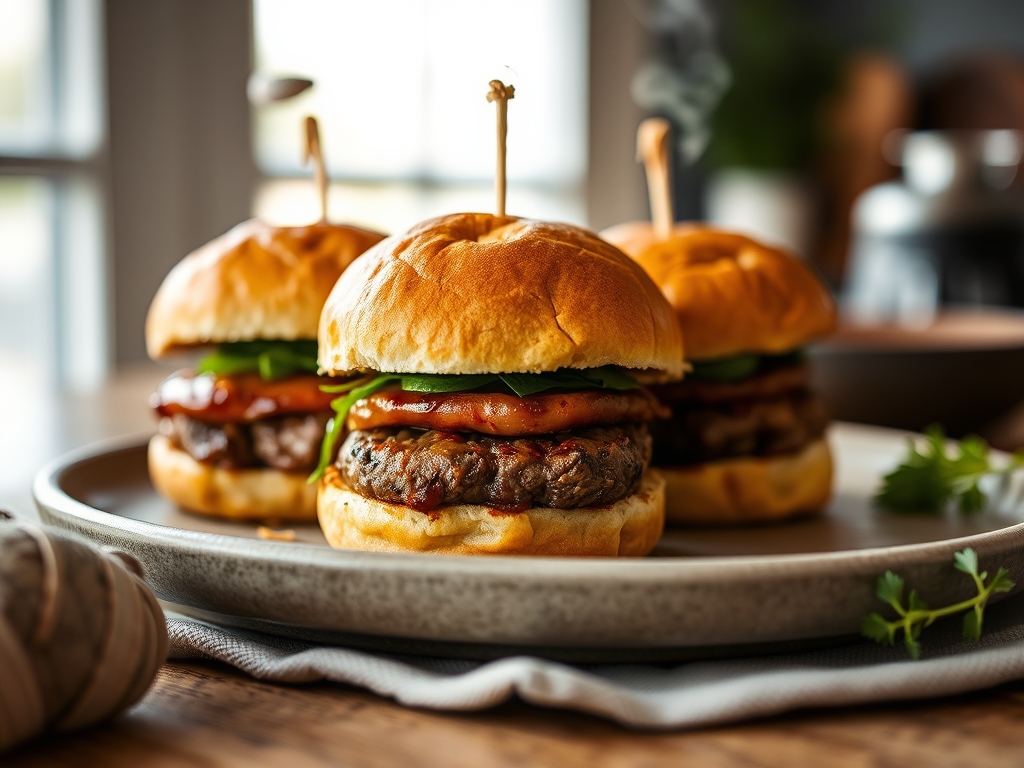
Look at the Masterclass photo. Notice the irregular, craggy edges of the patties; this is the hallmark of a "smash" technique. If your sliders look like perfectly smooth hockey pucks, you have over-handled the meat. If the cheese looks "sweaty" rather than creamy, you have overheated the proteins, causing the fats to separate. The color of the bun should be a "New Penny" copper. If it is pale, your pan was too cold. If it is black, your sugar content in the brioche ignited. Aim for the deep mahogany crust seen in the reference image; this indicates a successful chemical transformation of the surface proteins.
THE DEEP DIVE
Macro Nutrition Profile:
A standard serving of three sliders provides approximately 850 calories. This includes 45g of protein, 55g of fats, and 40g of carbohydrates. The high fat content is primarily from the 80/20 chuck and the brioche enrichment.
Dietary Swaps:
- Vegan: Utilize a pea-protein based crumble and vegan "cheddar" made from coconut oil and potato starch. Use a sourdough bun to avoid egg wash.
- Keto: Eliminate the bun entirely. Wrap the patty in a sturdy leaf of butter lettuce. Use a sugar-free aioli.
- GF: Substitute the brioche for a toasted sweet potato disc or a certified gluten-free bun.
Meal Prep & Reheating Science:
To maintain molecular structure, do not microwave. Microwaves vibrate water molecules, turning your bun into a rubberized mess. Reheat the patties in a dry skillet over medium heat and toast the buns separately. This preserves the "crisp-soft" duality.
THE KITCHEN TABLE
Why is my beef sticking to the pan?
You likely tried to flip it too early. Protein bonds to the metal initially; once the Maillard reaction occurs, the meat will naturally release itself. Patience is a technical requirement.
Can I use lean ground beef (90/10)?
You can, but you will fail the flavor audit. Fat is the primary carrier of flavor molecules. Lean beef will result in a dry, astringent mouthfeel that lacks the necessary lubrication for a slider.
What is the best way to slice the buns?
Use a serrated bread knife and a sawing motion. Do not press down, or you will collapse the delicate crumb structure of the brioche, ruining the aerated texture.
Should I let the meat come to room temperature?
For 10 Minute Beef Sliders, no. Keeping the meat cold allows you to achieve a violent sear on the outside while the inside remains perfectly pink. Room temp meat overcooks too quickly.