Listen up, kitchen architects. We are not here to assemble a limp, soggy lunch that sags under the weight of its own mediocrity. We are here to engineer a masterpiece of structural integrity and flavor density. The Quick Turkey Sandwich is often dismissed as a pedestrian convenience, but in this lab, we treat it as a high-stakes deployment of protein layering and moisture management. Imagine a foundation of toasted sourdough that offers a resonant crunch, giving way to a core of succulent, salt-cured poultry that has been tempered to room temperature to maximize lipid expression. We are talking about the perfect ratio of creamy lipids to acidic brightness; a piquant spread that cuts through the richness like a laser. Every component is a calculated variable. If your bread is a sponge for moisture, you have failed the audit. If your greens are wilted before the first bite, your thermal control is compromised. We are building a vessel for sustenance that respects the laws of physics and the demands of the palate. Strap in; it is time to optimize your lunch.
THE DATA MATRIX
| Metric | Specification |
|---|---|
| Prep Time | 5 Minutes |
| Execution Time | 3 Minutes |
| Yield | 1 Unit |
| Complexity (1-10) | 2 |
| Estimated Cost per Serving | $3.50 |
THE GATHERS
Ingredient Protocol:
- 2 slices Sourdough or Multigrain Bread (approx. 80g / 2.8oz)
- 115g / 4oz Smoked Turkey Breast (thinly shaved)
- 30ml / 2 tbsp High-Quality Mayonnaise
- 15ml / 1 tbsp Dijon Mustard
- 28g / 1oz Sharp Cheddar Cheese (thinly sliced)
- 30g / 1 cup Baby Arugula or Butter Lettuce
- 3-4 slices English Cucumber (approx. 40g / 1.4oz)
- 1.25g / 1/4 tsp Cracked Black Pepper
Section A: Ingredient Quality Audit:
The most common failure point in a Quick Turkey Sandwich is the "Water-Logged Protein" syndrome. Low-grade deli meats are often injected with a sodium phosphate solution to increase weight. When sliced, this moisture leaches out, destroying the structural integrity of your bread. The fix? Use a bench scraper to move your meat to a paper towel and pat it dry before assembly. If your greens lack the necessary snap, they are likely dehydrated. Submerge them in an ice-water bath for three minutes to restore turgor pressure within the plant cells. Finally, if your mayo is separating, it has been stored at an inconsistent temperature. Discard it. A stable emulsion is non-negotiable for a viscous mouthfeel.
THE MASTERCLASS
1. Thermal Foundation Prep
Place your bread slices in a high-efficiency toaster or under a broiler until the Maillard reaction has achieved a golden-brown hue. You are looking for a rigid exterior that can withstand the moisture of the condiments without becoming soft.
Pro Tip: Use a digital scale to ensure your bread slices are of equal thickness. This ensures even heat distribution and prevents one side from carbonizing while the other remains doughy. Consistent thickness is the bedrock of predictable crunch.
2. The Hydrophobic Barrier Application
Apply a thin, even layer of mayonnaise to the interior face of both bread slices. This is not just for flavor; the fats in the mayo act as a hydrophobic barrier that prevents the vegetable moisture from migrating into the toasted starch matrix.
Pro Tip: Use a small offset spatula to ensure the spread reaches the absolute edge of the crust. This seals the bread entirely. In culinary physics, an unsealed edge is a leak waiting to happen.
3. Protein Aeration and Layering
Do not slap the turkey down in a solid block. Instead, fold each thin slice onto itself to create "ribbons." This introduces air pockets between the layers of meat, which increases the surface area and allows the palate to perceive more flavor.
Pro Tip: Use precision kitchen tweezers or clean hands to "fluff" the meat. Aerated protein feels lighter and more luxurious on the tongue, preventing the "dense brick" sensation common in poorly constructed sandwiches.
4. Acidic Balancing and Final Assembly
Layer the sharp cheddar directly onto the warm turkey to initiate a slight melt. Top with the cucumber for a piquant crunch and the arugula for a peppery finish. Close the sandwich and compress slightly to "set" the layers.
Pro Tip: Use a heavy chef's knife or a serrated blade to slice the sandwich on a bias. A clean, swift stroke prevents the internal components from sliding out of alignment. If the layers shift, your friction coefficient is too low.
Section B: Prep & Timing Fault-Lines:
Timing is the silent killer of the Quick Turkey Sandwich. If you toast your bread and then walk away to answer an email, the starch will undergo "retrogradation," becoming tough and leathery rather than crisp. Your window of peak texture is approximately ninety seconds post-heat. Furthermore, temperature differentials matter. If you place ice-cold turkey on hot bread, you create condensation. Aim for "tempered" turkey; let it sit at room temperature for five minutes (within safety limits) to reduce the thermal shock to your toasted foundation.
THE VISUAL SPECTRUM
Section C: Thermal & Visual Troubleshooting:
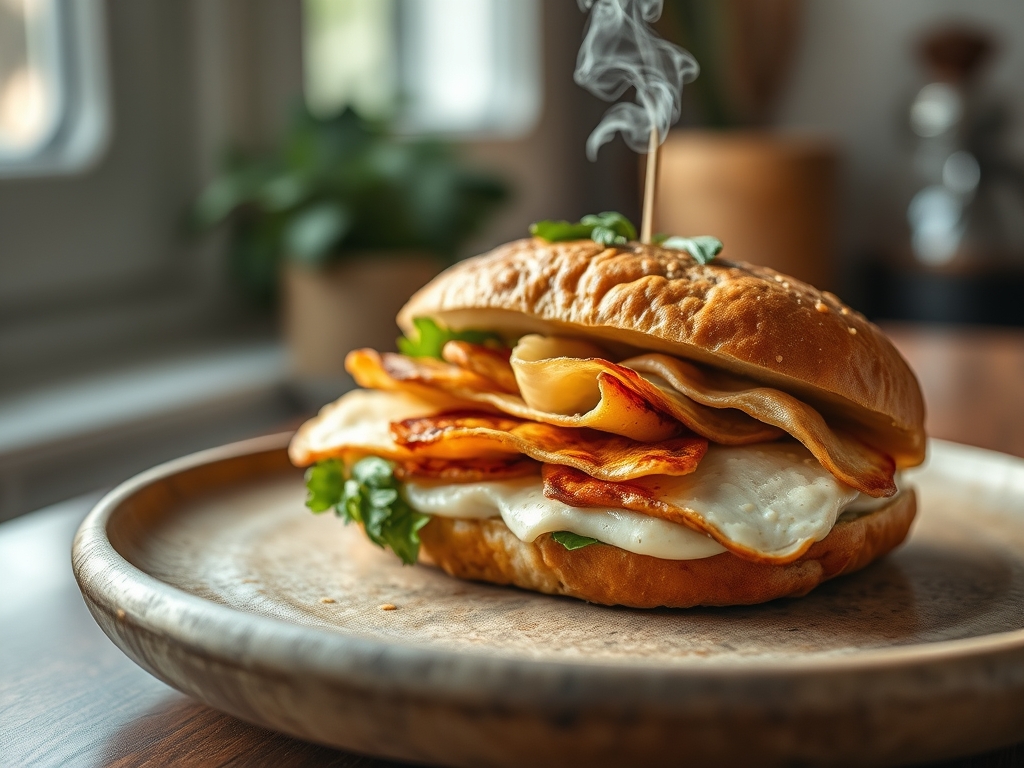
Referencing the Masterclass photo, notice the vibrant green of the arugula against the pale, matte finish of the turkey. If your sandwich looks "gray," you have failed to infuse the build with fresh elements. Dull cucumber slices indicate oxidation; slice them fresh for every deployment. If your cheese is sweating, it was likely sliced too far in advance and exposed to air. For the perfect visual, ensure the bread has a distinct "shatter" look to the crust. If the crust looks smooth and soft, you did not achieve enough moisture loss during the toasting phase. The goal is a high-contrast aesthetic that signals a variety of textures.
THE DEEP DIVE
Macro Nutrition Profile
A standard deployment of this sandwich yields approximately 450 calories. You are looking at 28g of protein, 18g of lipids (fats), and 42g of complex carbohydrates. It is a balanced fuel source designed for sustained cognitive output rather than a post-lunch glucose crash.
Dietary Swaps
- Vegan: Swap turkey for smoked tempeh and use a chickpea-based "aquafaba" mayo.
- Keto: Eliminate the bread entirely and wrap the components in large blanched collard green leaves or high-fat cheese wraps.
- GF: Utilize a high-density gluten-free loaf, but increase toasting time by 20% as GF starches require more energy to crisp.
Meal Prep & Reheating Science
To prep this for later, store the "wet" ingredients (turkey, cucumber, greens) in a separate airtight container from the "dry" ingredients (bread). Never pre-assemble more than two hours in advance. If you must reheat, use an air fryer at 350F for three minutes to render any fats and re-crisp the exterior without drying out the core.
THE KITCHEN TABLE
How do I stop my sandwich from sliding apart?
The "sliding" effect is caused by a lack of internal friction. Ensure your greens are bone-dry. Water acts as a lubricant between layers. Also, placing the cheese directly against the meat helps "glue" the structure together as it softens.
Can I substitute the sourdough?
You can, but you risk structural failure. Sourdough has a tight crumb and a sturdy crust that handles moisture better than "white" bread. If you switch, ensure the replacement is toasted to a higher degree of rigidity.
Why does my turkey taste bland?
You likely skipped the seasoning. Even pre-salted deli meats benefit from a dusting of cracked black pepper or a hint of lemon zest. This helps deglaze the palate and highlights the savory notes of the poultry.
Is the mustard really necessary?
Yes. The mustard provides acidity, which is required to cut through the heavy fats of the mayonnaise and cheese. Without it, the flavor profile is "flat." It acts as a chemical brightener for the entire assembly.