The kitchen is not merely a room; it is a thermal processing plant where the stakes are nothing less than total sensory satisfaction. We are here to discuss the Slow Cooker Chicken Curry, a dish that often suffers from the lethargy of its own preparation method. Most home cooks treat the slow cooker as a culinary graveyard where ingredients go to die in a watery, beige purgatory. We are ending that cycle today. We are auditing the infrastructure of flavor to ensure that every gram of poultry is saturated with a piquant, multi-dimensional spice profile. This is not about tossing things into a ceramic pot and hoping for the best. This is about strategic ingredient placement, the management of moisture migration, and the pursuit of a viscous, velvet-like sauce that coats the palate with authority. We are building a Slow Cooker Chicken Curry that functions as a high-performance engine of nutrition and heat. Prepare your workstations. The audit begins now.
THE DATA MATRIX
| Metric | Specification |
|---|---|
| Prep Time | 20 Minutes |
| Execution Time | 4 – 6 Hours (Low) / 3 Hours (High) |
| Yield | 6 Standard Units (Servings) |
| Complexity | 3 / 10 |
| Estimated Cost per Serving | $2.45 USD |
THE GATHERS
Ingredient Protocol:
- 800g / 1.75 lbs Boneless Skinless Chicken Thighs (Diced into 3cm cubes)
- 2 Large Yellow Onions (Finely minced)
- 400ml / 14 oz Full-fat Coconut Milk
- 400g / 14 oz Canned Crushed Tomatoes
- 45ml / 3 tbsp Yellow Curry Powder (High-potency)
- 15g / 1 tbsp Fresh Ginger (Grated)
- 4 Cloves Garlic (Crushed)
- 30ml / 2 tbsp Ghee or Neutral Oil
- 10g / 2 tsp Sea Salt
- 5g / 1 tsp Turmeric
- 250g / 2 cups Frozen Peas (Optional for texture)
- 15ml / 1 tbsp Fresh Lime Juice
Section A: Ingredient Quality Audit:
The primary failure point in a Slow Cooker Chicken Curry is the chicken breast. If you utilize white meat, the long-tail thermal exposure will result in a stringy, desiccated texture. You must utilize chicken thighs; the higher connective tissue and fat content allow the meat to render and stay succulent over several hours. If your spices look dull or gray, they have oxidized. To fix sub-par spices, "bloom" them in a hot pan with ghee for 60 seconds before adding them to the slow cooker to re-awaken the volatile oils. If your coconut milk has separated into a hard wax and a thin liquid, do not discard it. Use a whisk to aerate the fat back into the liquid before measuring to ensure a consistent emulsion.
THE MASTERCLASS
Step 1: The Maillard Foundation
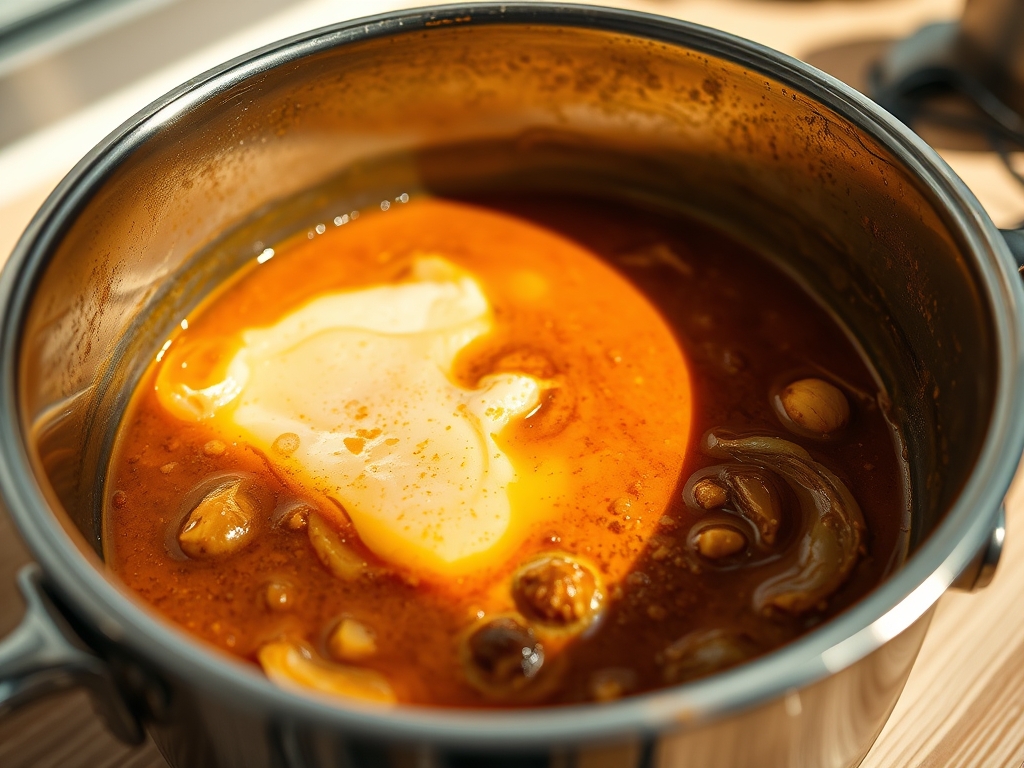
Begin by heating your ghee in a heavy-bottomed saucier or skillet. Sear the chicken thighs in batches until a golden-brown crust forms. You are not cooking them through; you are initiating the Maillard reaction to create complex flavor compounds that the slow cooker cannot produce on its own.
Pro Tip: Use a bench scraper to efficiently transfer chopped aromatics from your board to the pan. Searing the meat first prevents the "boiled" flavor profile common in low-quality slow cooker outputs.
Step 2: Aromatic Integration
Add your minced onions, ginger, and garlic to the remaining fat in the pan. Sauté until translucent. Add your dry spices and stir constantly for 90 seconds. This step ensures the spices infuse the fat, which acts as the primary flavor carrier for the entire dish.
Pro Tip: Use a digital scale to measure your spices by weight rather than volume for absolute consistency. Volumetric measurements are prone to packing errors that can ruin the salt-to-heat ratio.
Step 3: The Deglaze and Transfer
Pour a small splash of the coconut milk into the hot pan to deglaze the brown bits (fond) from the bottom. Pour this concentrated flavor liquid into the slow cooker crock along with the seared chicken, crushed tomatoes, and the remaining coconut milk.
Pro Tip: A silicone spatula is the essential tool here. It ensures you recover every drop of the high-density flavor compounds from the pan surface.
Step 4: The Low-Thermal Phase
Set the slow cooker to "Low" for 5 to 6 hours. While "High" is an option, the slower temperature ramp-up allows the collagen in the chicken thighs to break down into gelatin more effectively, resulting in a more viscous and luxurious mouthfeel.
Pro Tip: Resistance is key. Do not open the lid during the first four hours. Every time you lift the lid, you lose significant heat and moisture, extending the cook time by approximately 20 minutes per instance.
Step 5: The Final Balancing Act
Thirty minutes before the timer expires, stir in your frozen peas. Once the timer finishes, stir in the fresh lime juice. The acidity of the lime cuts through the heavy fats of the coconut milk, providing a necessary piquant finish.
Pro Tip: Use an instant-read probe thermometer to ensure the chicken has reached an internal temperature of 74C (165F). Any higher and you risk structural collapse of the protein fibers.
Section B: Prep & Timing Fault-Lines:
The most common timing error is the "mushy vegetable" syndrome. If you are adding potatoes or carrots, they must be cut into uniform 2cm cubes to ensure they reach tenderness at the same moment the chicken is finished. If you find the sauce is too thin at the end of the cycle, do not panic. Remove 100ml of the liquid, whisk in 5g of cornstarch to create a slurry, and stir it back into the pot for the final 15 minutes of cooking.
THE VISUAL SPECTRUM
Section C: Thermal & Visual Troubleshooting:
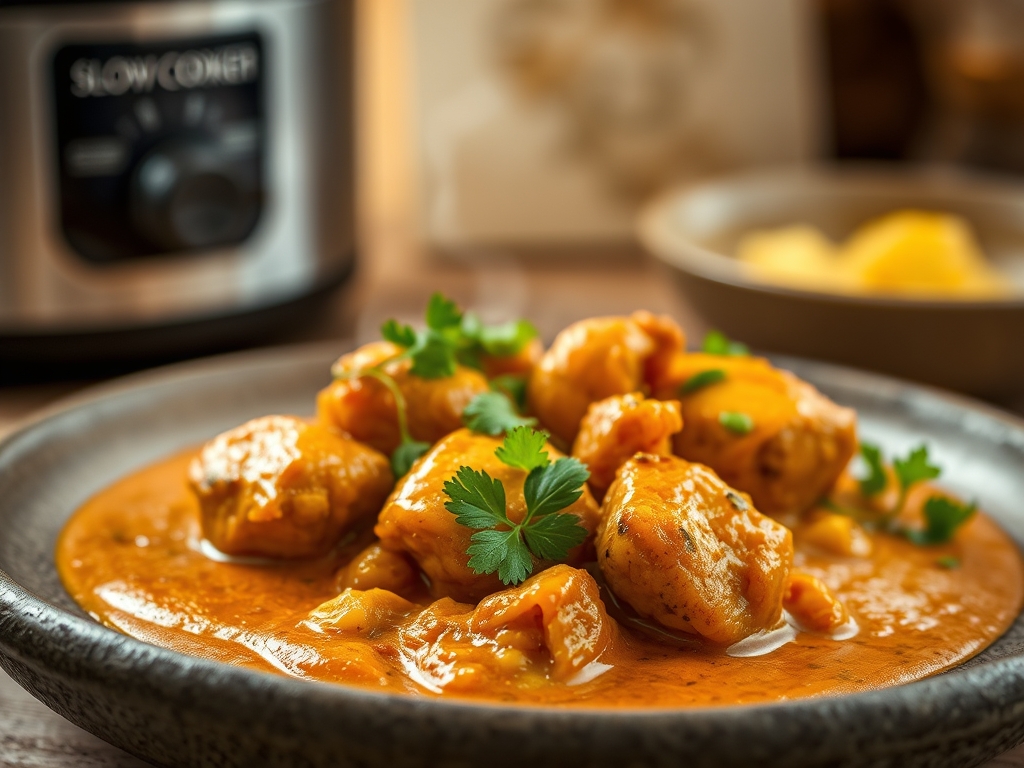
Referencing the Masterclass photo, your curry should exhibit a deep, ochre-gold hue. If your curry looks pale or milky, you likely under-toasted your turmeric or used a "light" coconut milk which lacks the necessary carotenoid-binding fats. If the sauce appears broken or oily on top, the temperature was too high, causing the emulsion to fail. You can fix a broken sauce by whisking in a tablespoon of Greek yogurt at the very end to re-bind the fats. The chicken should hold its shape but yield to the slightest pressure from a fork; if it is disintegrating into the sauce, you have exceeded the optimal thermal window.
THE DEEP DIVE
Macro Nutrition Profile:
A single serving provides approximately 380 calories, 28g of protein, 14g of carbohydrates, and 24g of fat. The majority of the fat is sourced from the coconut milk, providing medium-chain triglycerides (MCTs) that are rapidly utilized for energy.
Dietary Swaps:
For a Vegan variant, swap the chicken for 400g of chickpeas and 400g of cubed sweet potato. For Keto compliance, omit the peas and serve over riced cauliflower. This recipe is naturally Gluten-Free, provided your curry powder blend does not contain flour as an anti-caking agent.
Meal Prep & Reheating Science:
This curry is actually superior on day two. As the mixture cools, the spice molecules continue to migrate into the protein structures. When reheating, do not use a microwave on high power, as this can cause the coconut fat to separate. Reheat gently in a small saucepan over medium-low heat, adding a tablespoon of water to restore the original viscosity.
THE KITCHEN TABLE
Can I use frozen chicken directly in the slow cooker?
No. This is a food safety violation. Frozen meat stays in the bacterial "danger zone" for too long in a slow cooker. Always thaw your poultry completely before the audit begins.
Why is my curry sauce so watery?
Onions and chicken release significant moisture during the cook. To prevent a thin sauce, reduce the amount of added water or stock. The tomatoes and coconut milk provide ample hydration for the process.
Can I add spinach to this recipe?
Absolutely. Stir in fresh baby spinach during the final 5 minutes of the "Warm" setting. The residual heat is sufficient to wilt the leaves without turning them into a slimy, overcooked mess.
How do I make it spicier without ruining the balance?
Do not simply add more curry powder, as this can make the dish gritty. Instead, add finely diced Thai bird's eye chilies or a teaspoon of cayenne pepper during the aromatic sauté phase.