Stop treating your dinner as a casual assembly of ground protein and start viewing it as a high stakes structural engineering project. We are not just making dinner; we are conducting a Baked Meatloaf Audit to ensure your culinary infrastructure can withstand the pressures of gravity and the scrutiny of a discerning palate. Most home cooks produce a crumbly, weeping brick of grey matter that lacks integrity. We are here to fix that. We are looking for a dense yet aerated matrix where fats are properly emulsified and the exterior has undergone a complete Maillard transformation. Imagine a slab of savory excellence that yields to a fork but maintains its geometry on the plate. The aroma should be a complex broadcast of caramelized sugars and savory lipids. If your current output is leaking moisture or collapsing under its own weight, your system is failing. It is time to recalibrate your kitchen protocols and upgrade your internal hardware. We are diving deep into the physics of protein binding to ensure your next loaf is a masterpiece of structural compression.
THE DATA MATRIX
| Metric | Specification |
|---|---|
| Prep Time | 25 minutes |
| Execution Time | 65 minutes |
| Yield | 8 Portions |
| Complexity (1-10) | 4 |
| Estimated Cost per Serving | $2.75 |
THE GATHERS
Ingredient Protocol:
- 900g / 2 lbs Ground Beef (80/20 lean-to-fat ratio)
- 240ml / 1 cup Whole Milk
- 120g / 1 cup Panko Breadcrumbs
- 2 Large Eggs (Room temperature)
- 150g / 1 cup Yellow Onion (Finely minced)
- 30g / 2 tbsp Garlic (Microplaned)
- 15ml / 1 tbsp Worcestershire Sauce
- 10g / 2 tsp Kosher Salt
- 5g / 1 tsp Black Pepper (Freshly cracked)
- 120ml / 0.5 cup Ketchup (High lycopene content)
- 30ml / 2 tbsp Brown Sugar
- 15ml / 1 tbsp Apple Cider Vinegar
Section A: Ingredient Quality Audit:
If your beef is too lean, the loaf will be brittle and dry. Ensure you use an 80/20 blend to provide enough lipid content to render and lubricate the protein strands. If you find your meat is too wet or has been previously frozen and thawed, pat it dry with paper towels to prevent excess steam from ruining the crust. Sub-par breadcrumbs can lead to a gummy interior; always use Panko for its superior surface area and ability to aerate the mixture. If your onions are too large, they create structural "fault lines" that cause the loaf to crack. Use a food processor to achieve a fine mince that integrates seamlessly into the protein matrix.
THE MASTERCLASS
1. Hydrate the Panade
In a small stainless steel bowl, combine the milk and breadcrumbs. Allow them to sit for ten minutes until the mixture becomes a viscous paste. This is the foundation of your moisture retention system.
Pro Tip: Use a digital scale to measure your crumbs by weight rather than volume. Accurate hydration ensures the starch granules swell properly, creating a gel that traps meat juices during the thermal transition.
2. Aromatics and Emulsification
Whisk the eggs, Worcestershire sauce, salt, pepper, and minced aromatics into the hydrated panade. This ensures that the seasoning is evenly distributed before it hits the meat, preventing overworking of the beef.
Pro Tip: Use a saucier whisk to incorporate the eggs thoroughly. This creates a stable emulsion that will coat every fiber of the ground beef, acting as a chemical glue during the baking process.
3. Structural Integration
Gently fold the beef into the liquid mixture using a bench scraper or your hands. Do not squeeze or mash the meat. You want to maintain the air pockets between the protein strands to prevent the loaf from becoming a dense, rubbery puck.
Pro Tip: Over-mixing leads to cross-linking of proteins, which results in a tough texture. Stop the moment the ingredients are visually homogenous. Think of it as folding a delicate cake batter rather than kneading dough.
4. Geometric Shaping
Transfer the mixture to a parchment-lined baking sheet. Shape it into a rectangular prism approximately four inches wide and three inches high. This free-form approach allows for maximum surface area exposure, facilitating better heat exchange.
Pro Tip: Avoid using a loaf pan. A pan traps steam and boils the sides of the meat. A free-form loaf on a flat sheet allows the air to circulate, ensuring a uniform Maillard reaction across the entire exterior.
5. Glaze Application and Thermal Execution
Whisk the ketchup, sugar, and vinegar in a small bowl. Brush half of the glaze over the loaf. Place in a preheated oven at 175C / 350F. Bake until the internal temperature reaches 60C / 140F, then apply the remaining glaze and finish until it hits 71C / 160F.
Pro Tip: Use an instant-read probe thermometer to monitor the core temperature. Pulling the meat at exactly the right moment prevents the cellular walls from collapsing and expelling all their moisture.
Section B: Prep & Timing Fault-Lines:
The most common human error is the "Cold Core" syndrome. If you use beef straight from a near-freezing refrigerator, the outside will overcook before the center reaches safety. Allow your meat to sit at room temperature for twenty minutes before mixing. Another failure point is the "Resting Phase." Cutting the loaf immediately after it leaves the oven is a catastrophic error. The internal pressure will force all the viscous juices out, leaving you with dry meat. You must allow a minimum ten-minute rest for the proteins to relax and reabsorb the rendered fats.
THE VISUAL SPECTRUM
Section C: Thermal & Visual Troubleshooting:
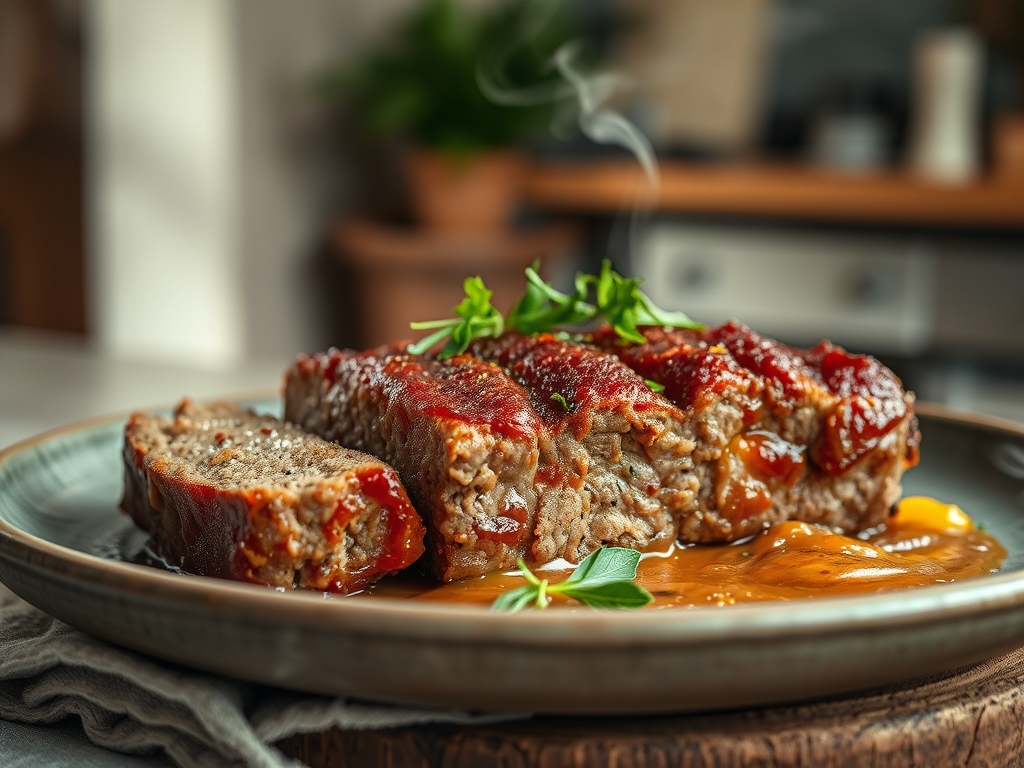
Look at the Masterclass photo above. Notice the deep, mahogany hue of the glaze; this indicates that the sugars have undergone caramelization without scorching. If your loaf looks pale or "greyed," your oven temperature is likely too low or you have too much moisture in your mix. If you see "white seepage" on the surface, that is albumin being pushed out because the heat was applied too aggressively. To fix a dull color, increase the sugar content in your glaze or move the loaf to a higher rack for the final five minutes. The texture should appear tight and unified, not crumbly or falling apart at the edges.
THE DEEP DIVE
Macro Nutrition Profile:
A standard serving provides approximately 320 calories, 24g of protein, 18g of fat, and 12g of carbohydrates. The high protein density makes this an excellent anchor for a recovery meal, provided you manage the sodium levels in your ketchup and salt additions.
Dietary Swaps:
For a Vegan iteration, swap the beef for a mix of pulsed mushrooms and lentils, and use a flax-egg as the binder. For Keto enthusiasts, replace the breadcrumbs with crushed pork rinds and use a sugar-free ketchup. Gluten-Free requirements are easily met by substituting Panko with certified GF crumbs or almond flour.
Meal Prep & Reheating Science:
Meatloaf is molecularly more stable the next day. To reheat, slice the loaf and sear it in a cast iron skillet with a touch of butter. This creates a secondary Maillard reaction on the cut faces, adding a piquant crunch while the interior remains moist. Avoid the microwave, as it vibrates water molecules too violently, causing the protein structure to toughen.
THE KITCHEN TABLE
Why does my meatloaf always fall apart?
You likely lack a proper binder-to-meat ratio or you skipped the resting period. Ensure your panade is a thick paste and let the loaf rest for ten minutes to allow the protein structure to solidify before slicing.
Can I use ground turkey instead of beef?
Yes, but turkey is leaner and lacks the necessary lipids for a moist finish. Add a tablespoon of olive oil or finely grated mushrooms to the mix to compensate for the missing fat and maintain structural integrity.
How do I get a better crust on the bottom?
Preheat your baking sheet before placing the loaf on it. The initial thermal shock will sear the bottom surface immediately, creating a sturdy base and preventing the loaf from sticking to the parchment paper.
What is the best way to mince the onions?
Use a microplane or the finest setting on a box grater. Large chunks of onion create physical gaps in the meat matrix, which lead to structural failure and crumbling when you attempt to slice the finished product.