Stop treating your convection oven like a storage unit and start treating it like a high-velocity particle accelerator for brassicas. We are not here to produce the soggy, sulfurous mush of a thousand school cafeteria nightmares. We are here to achieve total textural dominance. The Air Fryer Brussels Sprouts protocol is the ultimate test of surface-to-volume ratios. By leveraging a high-speed fan and a concentrated heating element, we can force moisture out of the outer leaves while the core undergoes a rapid thermal transition. This creates a contrast that is nothing short of addictive. Imagine a leaf so shattered and crisp it mimics a potato chip, yielding to a center that is buttery and sweet. This is the Maillard reaction on overdrive. We are chasing that deep, mahogany char that signals the conversion of complex carbohydrates into simple, caramelized sugars. If your kitchen does not currently smell like a high-end steakhouse side dish, you are doing it wrong. Let us calibrate your equipment and optimize your workflow for maximum crunch.
THE DATA MATRIX
| Metric | Specification |
|---|---|
| Prep Time | 10 Minutes |
| Execution Time | 12-15 Minutes |
| Yield | 4 Servings |
| Complexity (1-10) | 3 |
| Estimated Cost per Serving | $1.25 |
THE GATHERS
Ingredient Protocol:
- 500g / 1.1 lbs Fresh Brussels Sprouts (uniform medium size)
- 30ml / 2 tbsp Extra Virgin Olive Oil (high smoke point preferred)
- 5g / 1 tsp Diamond Crystal Kosher Salt
- 2g / 0.5 tsp Freshly cracked black pepper
- 15ml / 1 tbsp Balsamic Glaze (for the final infuse step)
- 20g / 0.25 cup Finely grated Parmigiano-Reggiano
- 1g / 0.25 tsp Smoked Paprika (to render a deeper color)
Section A: Ingredient Quality Audit:
The primary failure point in this operation is the raw material. If your sprouts are soft or yellowing, the cellular structure has already begun to collapse. This leads to a "steaming" effect rather than a "frying" effect. To fix sub-par, slightly wilted sprouts, perform a cold-water shock. Submerge the trimmed sprouts in an ice bath for 15 minutes to re-pressurize the vacuoles. Ensure they are bone-dry before oil application. If the sprouts are excessively large, they will remain raw in the center while the exterior burns. The technical fix is a "cross-hatch" incision at the base of the stem to allow heat to penetrate the dense core at the same rate as the outer leaves.
THE MASTERCLASS
1. The Surgical Prep
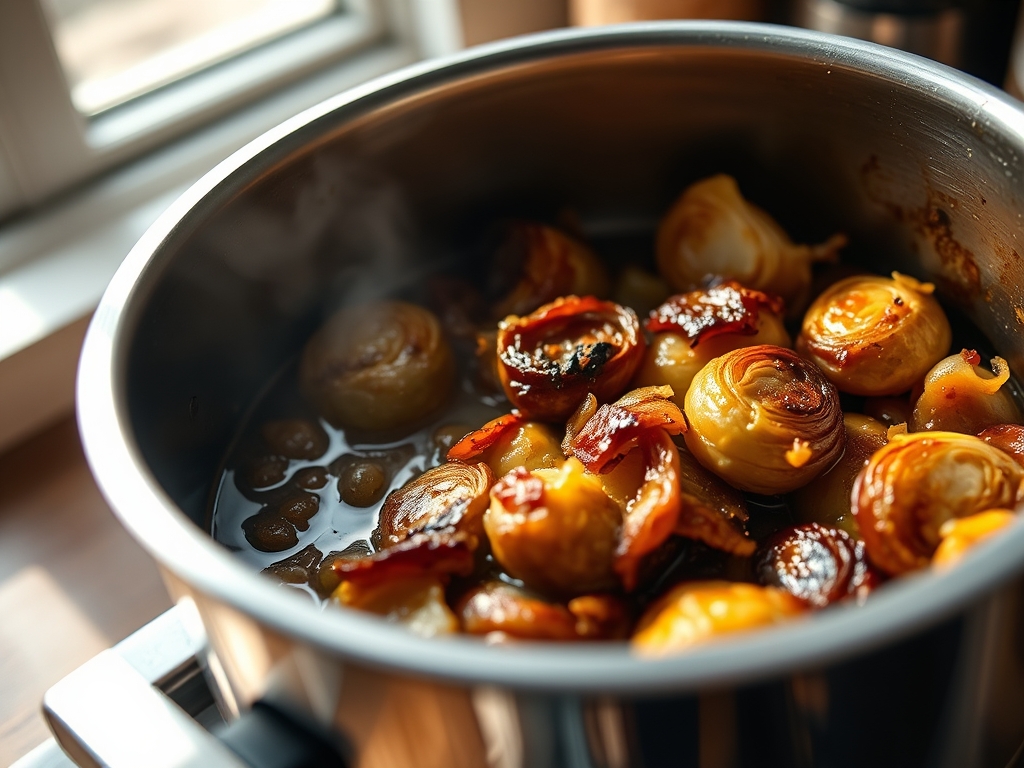
Wash and dry the sprouts thoroughly. Use a sharp chef knife to trim the woody stem end and slice each sprout in half vertically. If loose leaves fall off, do not discard them. These "stray leaves" are the high-surface-area gold that will provide the ultimate crunch.
Pro Tip: Use a bench scraper to efficiently move your prepped veg from the cutting board to your mixing bowl. This prevents "bruising" the delicate edges of the leaves which can lead to uneven browning.
2. The Lipid Coating
In a large stainless steel bowl, toss the sprouts with the olive oil, salt, pepper, and paprika. You must ensure every crevice is coated. The oil acts as the heat transfer medium. Without total coverage, the air will simply dehydrate the vegetable rather than fry it.
Pro Tip: Use a digital scale to measure your oil. Too much oil will pool at the bottom of the air fryer and cause smoking; too little will result in a dry, "dusty" mouthfeel. Precision is the difference between amateur and executive levels.
3. Thermal Loading
Preheat your air fryer to 200C / 400F for 5 minutes. Arrange the sprouts in the basket in a single layer, cut-side down. This maximizes the contact with the hot surface and ensures the flat face of the sprout achieves a deep, even caramelization.
Pro Tip: Do not overcrowd the basket. If you stack the sprouts, you create a "steam tent" that prevents the aerate function of the machine from doing its job. Cook in batches if necessary to maintain high airflow.
4. The Agitation Phase
Halfway through the cooking cycle (around the 7-minute mark), remove the basket and give it a vigorous shake. This redistributes the sprouts and ensures the "stray leaves" don't burn while the denser halves continue to cook.
Pro Tip: Use a saucier or small pan to warm your balsamic glaze slightly before the final toss. A warm glaze is less viscous and will coat the hot sprouts more evenly without cooling them down.
5. The Finishing Protocol
Once the sprouts show a dark brown char and the centers are fork-tender, remove them from the heat. Immediately toss with the Parmigiano-Reggiano and the balsamic glaze while the residual heat is high enough to slightly melt the cheese.
Pro Tip: A microplane is the professional tool of choice here. It creates a "snow" of cheese that adheres to the oily surface of the sprouts, creating a lacy, savory crust rather than heavy clumps.
Section B: Prep & Timing Fault-Lines:
The most common human error is the "Cold Start." If you put the vegetables into a cold air fryer, the temperature ramp-up time allows moisture to leak out of the cell walls, resulting in a rubbery texture. Always preheat. Secondly, timing is dependent on the wattage of your specific unit. Use your eyes, not just the timer. If you smell a piquant, slightly burnt sugar aroma, you have reached the limit of the Maillard reaction and must evacuate the basket immediately.
THE VISUAL SPECTRUM
Section C: Thermal & Visual Troubleshooting:
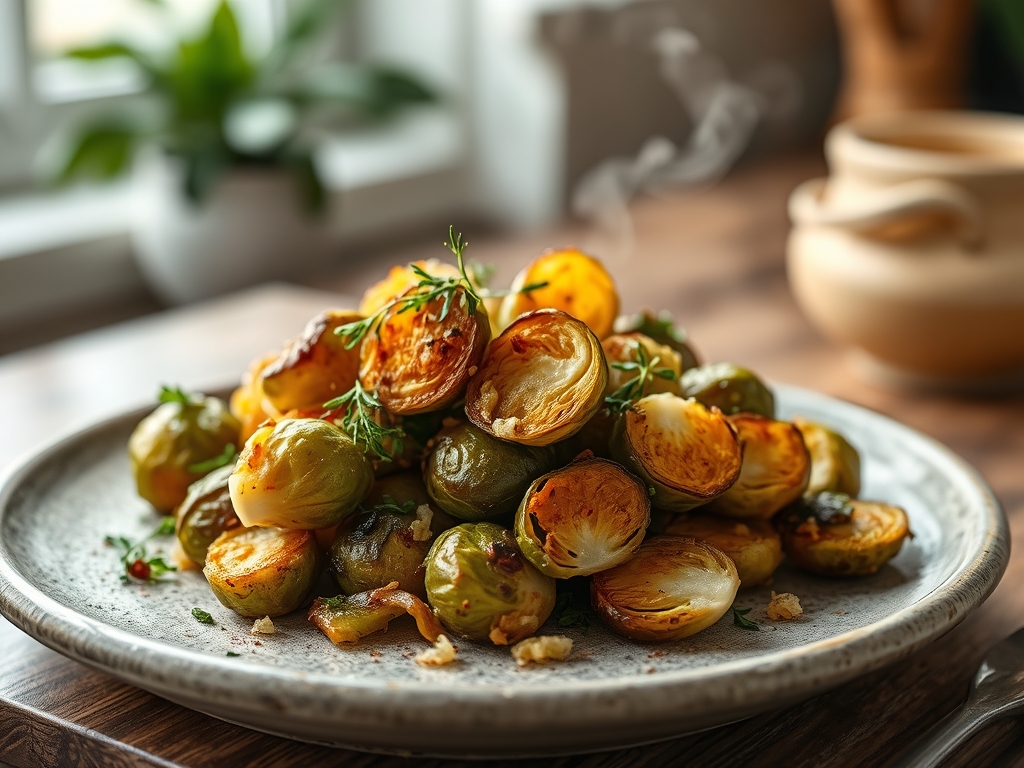
Look at the Masterclass photo. Notice the "shattered" look of the outer leaves. If your sprouts look pale and uniform, you have failed to reach the 155C threshold where caramelization occurs. Increase the temperature by 10 degrees. If the sprouts look black but are hard in the middle, your temperature is too high; the exterior is burning before the heat can conduct to the center. If the color is dull, you likely forgot the acid. A final splash of lemon juice or balsamic glaze will "brighten" the visual spectrum and the flavor profile simultaneously.
THE DEEP DIVE
Macro Nutrition Profile:
A standard serving contains approximately 120 calories, 8g of healthy fats, 10g of carbohydrates, and 4g of protein. They are a powerhouse of Vitamin K and Vitamin C.
Dietary Swaps:
For a Vegan version, swap the parmesan for nutritional yeast or a toasted walnut crumble. For Keto, omit the balsamic glaze and increase the parmesan or add crumbled bacon bits to render extra fat and flavor. This dish is naturally Gluten-Free.
Meal Prep & Reheating Science:
To maintain the molecular structure, do not microwave leftovers. The microwave excites water molecules, turning your crisp sprouts into a soggy mess. Instead, return them to the air fryer at 180C for 3 minutes. This re-activates the surface oils and restores the "shatter" crunch.
THE KITCHEN TABLE
Why are my sprouts bitter?
Bitterness usually stems from undercooking or using old sprouts. High-heat air frying converts bitter glucosinolates into sweeter compounds. Ensure you achieve a deep char to balance the natural earthiness with caramelized sugars.
Can I use frozen sprouts?
It is possible but not optimal. Frozen sprouts have compromised cell walls from ice crystals. To succeed, air fry them from frozen at the highest setting to evaporate moisture quickly. Do not thaw them first.
Why is my air fryer smoking?
This is likely due to "stray leaves" hitting the heating element or using an oil with a low smoke point like unrefined coconut oil. Keep the basket clean and stick to high-heat stable fats.
How do I get the cheese to stick?
The "adhesive" is the oil and the residual heat. Toss the sprouts with cheese immediately upon removal from the fryer. The heat will create a semi-permanent bond between the protein in the cheese and the vegetable.