Stop treating your vegetables like an afterthought. If your current output resembles a pile of limp, sulfurous mush, you are failing the basic tenets of culinary infrastructure. We are here to execute a high-performance audit on the most underrated asset in your repertoire: Oven Roasted Broccoli. This is not about boiling florets into submission until they lose their structural integrity and vibrant chlorophyll. This is about the strategic application of dry heat to trigger the Maillard reaction, transforming humble brassica into charred, nutty gold. We are looking for a specific textural contrast: a stalk that remains al dente while the florets achieve a shattered, crisp lace. When executed with precision, the sugars within the broccoli caramelize, creating a flavor profile that is deeply savory and slightly sweet. Forget the steamer basket. We are utilizing the oven as a high-velocity thermal chamber to render out moisture and infuse every crevice with lipid-bound aromatics. It is time to upgrade your technical standards and produce a side dish that demands center stage.
THE DATA MATRIX
| Metric | Specification |
|---|---|
| Prep Time | 10 Minutes |
| Execution Time | 20 Minutes |
| Yield | 4 Servings |
| Complexity (1-10) | 2 |
| Estimated Cost per Serving | $0.85 USD |
THE GATHERS
Ingredient Protocol:
- 500g / 1.1 lbs Broccoli Florets (trimmed to uniform size)
- 45ml / 3 tbsp Extra Virgin Olive Oil
- 5g / 1 tsp Kosher Salt
- 2g / 0.5 tsp Cracked Black Pepper
- 3g / 1 tsp Garlic Powder
- 15ml / 1 tbsp Lemon Juice (freshly squeezed)
- 30g / 0.25 cup Finely Grated Parmesan Cheese (optional)
Section A: Ingredient Quality Audit:
Sub-par raw materials are the primary cause of systemic failure. If your broccoli feels rubbery or shows yellowing buds, the cellular structure has already begun to collapse. To fix "soft" broccoli before roasting, submerge the stalks in an ice bath for 15 minutes to restore turgor pressure. Furthermore, ensure your olive oil is not rancid; a viscous, high-quality oil is essential for heat transfer. If the oil smells like old crayons, it will infuse the dish with off-flavors that no amount of seasoning can mask. Always use a digital scale for your salt ratios to ensure consistency across different batches.
THE MASTERCLASS
Step-by-Step Execution:
1. Thermal Calibration and Moisture Management
Preheat your convection oven to 220C / 425F. Use a digital thermometer to verify the internal temperature of the oven cavity. While the oven stabilizes, wash your broccoli and dry it with obsessive detail. Use a salad spinner or clean kitchen towels to remove every droplet of surface water.
Pro Tip: Surface moisture is the enemy of the Maillard reaction. If the broccoli is wet, the oven energy will be wasted evaporating water (steaming) rather than browning the surface. A dry floret ensures a piquant char.
2. The Lipid Enrobing Process
Place the florets in a large stainless steel mixing bowl. Drizzle the olive oil over the greens and use a bench scraper or your hands to toss them vigorously. Ensure the oil penetrates the tight curls of the florets. Add the salt, pepper, and garlic powder, tossing again to ensure an even distribution of particulates.
Pro Tip: Using a bowl rather than seasoning on the tray ensures a 360-degree coating. This creates a protective lipid barrier that allows the heat to render the edges without drying out the interior.
3. Spatial Distribution on the Sheet Pan
Transfer the broccoli to a heavy-gauge rimmed baking sheet. Arrange the florets in a single layer, ensuring they are not touching. Use a second pan if necessary to avoid overcrowding.
Pro Tip: Overcrowding creates a micro-climate of steam. To achieve the crisp texture seen in professional audits, you need airflow. Proper spacing allows the hot air to aerate the pan surface, leading to uniform browning.
4. The High-Heat Transformation
Slide the pan into the center rack. Roast for 15 to 20 minutes. At the halfway mark, use a metal spatula to flip the florets. This ensures the side in contact with the pan does not over-caramelize while the top remains pale.
Pro Tip: The "sizzle" you hear is the sound of cellular breakdown and sugar transformation. If you don't hear a faint hiss when you open the door, your pan was not conductive enough or your temperature is too low.
5. The Acidic and Umami Finish
Remove the pan from the oven. Immediately drizzle with fresh lemon juice and sprinkle with Parmesan. The residual heat will melt the cheese and deglaze the small browned bits (fond) from the pan, sticking them back onto the broccoli.
Pro Tip: Adding acid (lemon juice) at the very end brightens the flavor profile and cuts through the richness of the oil. This is a classic culinary "brightening" technique used to balance heavy roasted notes.
Section B: Prep & Timing Fault-Lines:
Timing errors usually stem from inconsistent floret size. If one piece is the size of a golf ball and another is a marble, the smaller one will carbonize before the larger one reaches tenderness. Use a sharp chef knife to ensure uniform diameters. If your oven has "cold spots," rotate the pan 180 degrees halfway through the cycle to ensure the thermal load is distributed evenly across the batch.
THE VISUAL SPECTRUM
Section C: Thermal & Visual Troubleshooting:
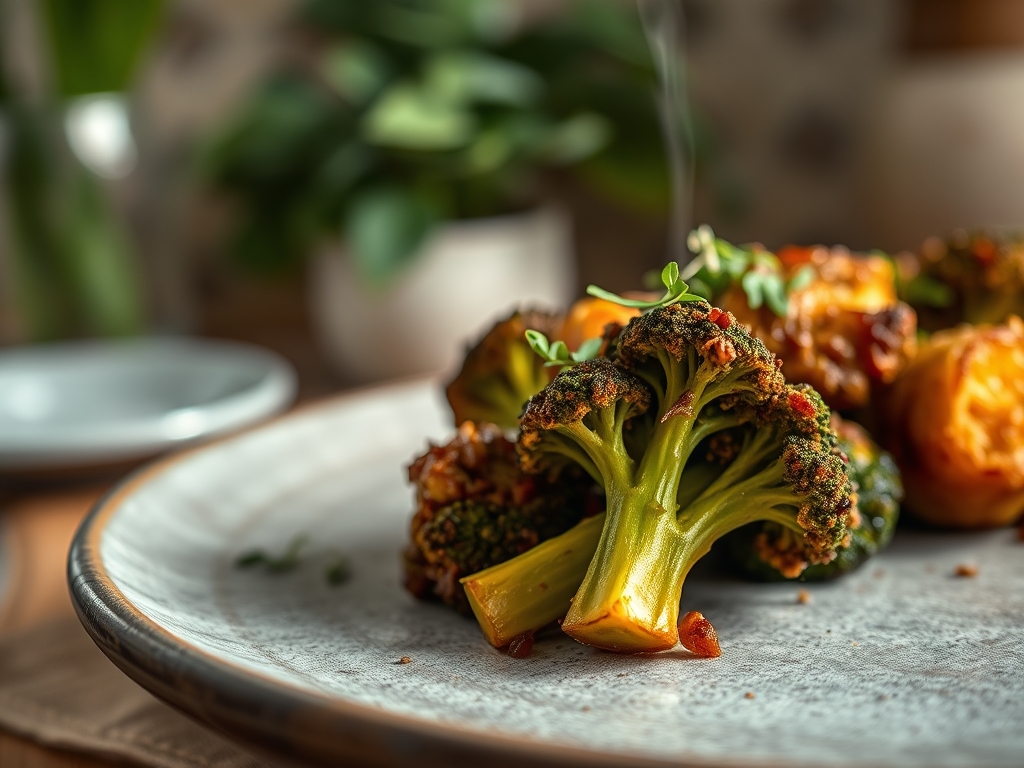
Analyze the Masterclass photo. Notice the deep mahogany edges on the florets; this is the visual indicator of a successful audit. If your broccoli looks pale and "wet," your oven temperature was likely below 200C. If the florets are black but the stalks are raw, the pan was too close to the heating element. To fix a dull, forest-green color, increase the heat and shorten the cook time. High heat preserves the magnesium in the chlorophyll for a shorter duration, resulting in a more vibrant visual output. If the texture is "mushy," you have overshot the structural breakdown phase; pull the tray 3 minutes earlier next time.
THE DEEP DIVE
Macro Nutrition Profile:
A standard serving of Oven Roasted Broccoli provides approximately 120 calories, 9g of healthy fats (primarily monounsaturated from olive oil), 4g of protein, and 6g of fiber. It is a micronutrient powerhouse, loaded with Vitamin C, Vitamin K, and folate.
Dietary Swaps:
- Vegan: Replace Parmesan with nutritional yeast or toasted panko breadcrumbs for a similar umami crunch.
- Keto: This dish is naturally keto-compliant. Increase the olive oil or add crumbled bacon to boost the fat macros.
- Gluten-Free: Naturally GF. Ensure your garlic powder does not contain anti-caking agents derived from grain if you are highly sensitive.
Meal Prep & Reheating Science:
To maintain molecular structure during reheating, avoid the microwave. Microwaves vibrate water molecules, which turns the crisp florets into a soggy mess. Instead, use a toaster oven or an air fryer at 180C for 4 minutes. This flashes the surface oils, restoring the "shattered" texture of the florets without further cooking the interior.
THE KITCHEN TABLE
Why is my broccoli bitter?
Bitterness usually results from over-roasting the garlic powder or using old, oxidized oil. Ensure you apply spices evenly and use fresh oil. A touch of honey or balsamic glaze can counteract bitterness through sugar competition.
Can I roast frozen broccoli?
Yes, but you must skip the thawing phase. Toss frozen florets in oil and roast at 230C / 450F. The higher heat is necessary to evaporate the ice crystals rapidly before they can soften the cell walls.
Do I need to peel the stalks?
For the ultimate technical execution, yes. Use a vegetable peeler to remove the fibrous outer skin of the stalks. This allows the heat to penetrate the tender core more efficiently, matching the cook time of the delicate florets.
What is the best pan for roasting?
A heavy-duty aluminum half-sheet pan is the industry standard. It conducts heat rapidly and evenly. Avoid glass baking dishes, as they are poor conductors and often lead to steaming rather than roasting.