Listen up, kitchen operatives. We are moving beyond the realm of lukewarm canned mush and entering the high-stakes world of rapid-fire flavor extraction. When the clock is ticking and the pantry looks like a desolate landscape of tin and dry goods, the Pantry Black Bean Soup is your primary tactical advantage. This is not just a meal; it is a structural masterpiece of dark legume chemistry. We are talking about deep, earthy base notes colliding with the sharp, acidic bite of lime and the smoky whisper of cumin. The goal is a texture so viscous it clings to the back of a spoon like velvet, achieved not through hours of simmering, but through strategic mechanical agitation and precise thermal control. We are auditing your flavor profile from the ground up. Forget the bland, watery disasters of your past. We are here to render aromatics into a fragrant paste, infuse liquids with concentrated spice, and deglaze the pan to capture every single molecule of caramelized goodness. Prepare for a sensory overhaul.
THE DATA MATRIX
| Metric | Specification |
|---|---|
| Prep Time | 10 Minutes |
| Execution Time | 20 Minutes |
| Yield | 4 Servings |
| Complexity (1-10) | 3 |
| Estimated Cost per Serving | $1.15 |
THE GATHERS
Ingredient Protocol:
- 2 cans (850g / 30 oz) Black beans, un-drained
- 1 large (200g / 7 oz) Yellow onion, finely diced
- 3 cloves (15g / 0.5 oz) Garlic, minced
- 1 tbsp (15ml / 0.5 oz) Neutral oil or avocado oil
- 1 tbsp (6g / 0.2 oz) Ground cumin
- 1 tsp (2g / 0.07 oz) Smoked paprika
- 500ml (2 cups) Vegetable or chicken stock
- 15ml (1 tbsp) Fresh lime juice
- 5g (1 tsp) Kosher salt
- 2g (0.5 tsp) Cracked black pepper
Section A: Ingredient Quality Audit:
If your canned beans possess a metallic aftertaste, your audit has failed at the procurement stage. To fix this, drain the beans and rinse them under cold water to remove the viscous packing liquid, then replace that volume with high-quality stock. If your spices lack an aromatic punch, they have likely oxidized. Revive them by "blooming" them in hot oil for 60 seconds before adding any liquid. This process uses heat to release fat-soluble volatile compounds that would otherwise remain trapped in the dry cellulose structure of the spice.
THE MASTERCLASS
1. The Aromatic Foundation
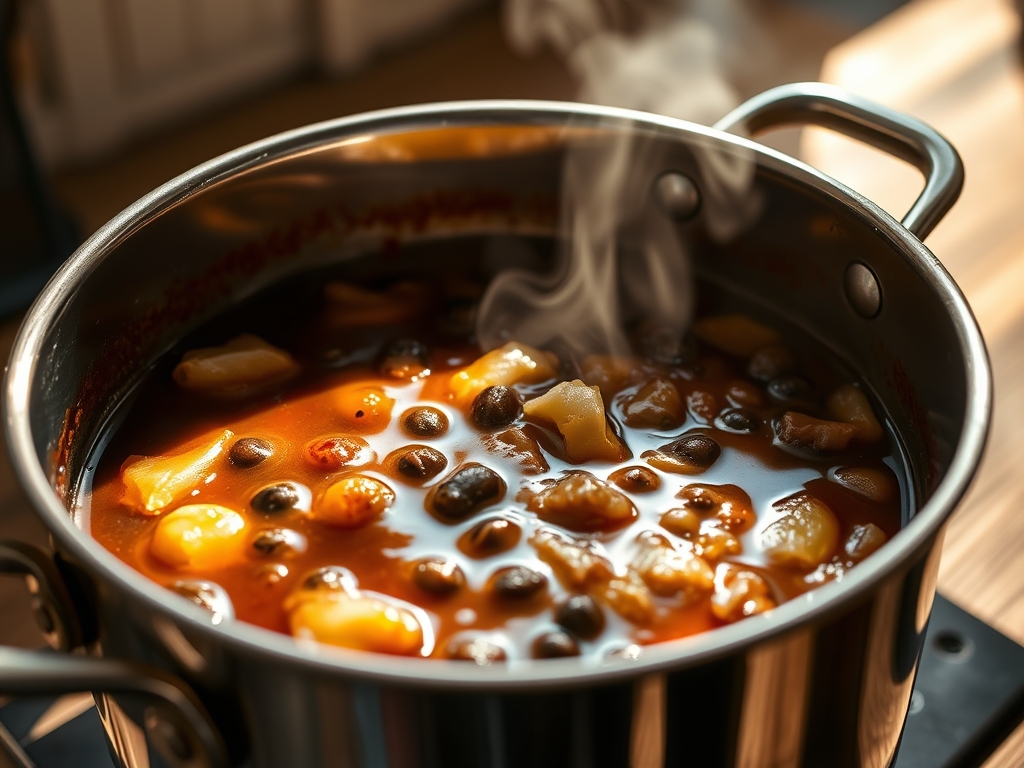
Heat your oil in a heavy-bottomed saucier over medium heat. Add the onions and sauté until translucent. Use a bench scraper to move your diced vegetables from the cutting board to the pan efficiently to prevent uneven cooking.
Pro Tip: This is where you establish the Maillard reaction. By keeping the onions moving, you ensure even browning without burning the delicate sugars.
2. Spice Integration and Bloom
Add the garlic, cumin, and smoked paprika. Stir constantly for 60 seconds until the kitchen smells like a high-end smokehouse.
Pro Tip: Spices are hydrophobic. Toasting them in oil allows the flavor molecules to dissolve into the fat, which then carries those flavors across your palate more effectively than water ever could.
3. The Legume Deployment
Pour in the black beans and their liquid, followed by the stock. Increase the heat to bring the mixture to a rapid simmer.
Pro Tip: If you used a digital scale to measure your ingredients, your ratios will be perfect. The starch in the bean liquid acts as a natural thickener, creating a built-in emulsification system.
4. Mechanical Texturizing
Use an immersion blender to pulse the soup 3 to 5 times. You want to break down roughly one-third of the beans to create a thick, creamy base while leaving the rest whole for structural integrity.
Pro Tip: Aerating the soup slightly during this process lightens the mouthfeel. If you lack an immersion blender, a standard potato masher will suffice to release the internal starches.
5. The Acidic Finish
Stir in the lime juice, salt, and pepper. Taste and adjust. The acidity of the lime acts as a "brightness" filter, cutting through the heavy earthiness of the beans.
Pro Tip: Always add acid at the very end. High heat can dull the vibrant citrus notes, and adding it too early can toughen the skins of the beans due to pH interference.
Section B: Prep & Timing Fault-Lines:
The most common failure in this protocol is the "rushed simmer." If the soup is too thin, you have not allowed enough evaporation to occur. Increase the thermal output and stir frequently to prevent scorching on the bottom of the saucier. Conversely, if the soup becomes a sludge, you have over-reduced. Whisk in 50ml increments of hot stock until the desired viscosity is restored. Precision timing is the difference between a professional-grade broth and a kitchen catastrophe.
THE VISUAL SPECTRUM
Section C: Thermal & Visual Troubleshooting:
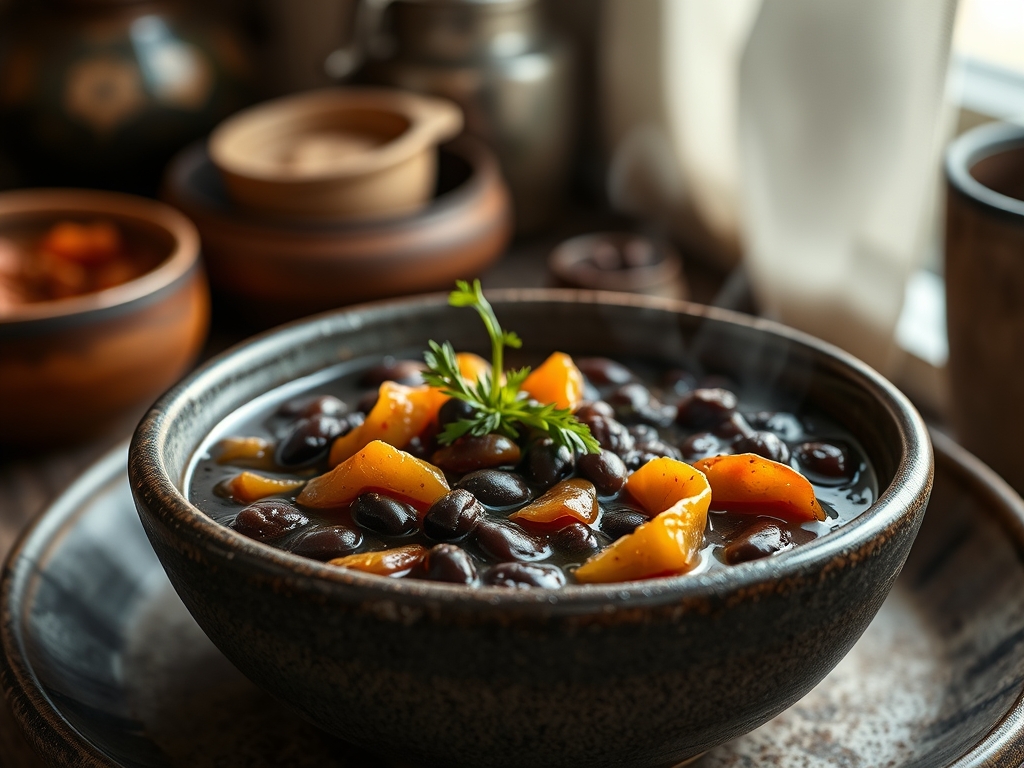
Referencing the Masterclass photo, your soup should exhibit a deep obsidian hue with a glossy sheen. If your soup looks grey or dull, your beans were likely old or the pH of your water was too alkaline. A glossy finish indicates a successful starch-fat emulsion. If you see oil slicking on the surface, the emulsion has broken; fix this by blending a small portion of the soup and whisking it back into the main body. The garnish of bright green cilantro or white sour cream provides the necessary visual contrast to make the dark base pop.
THE DEEP DIVE
Macro Nutrition Profile:
A single serving provides approximately 220 calories, 12g of protein, 35g of carbohydrates, and 10g of fiber. This is a high-satiety, low-glycemic index fuel source. The high fiber content ensures a slow glucose release, preventing the mid-afternoon energy crash common with refined carbohydrate meals.
Dietary Swaps:
For a Vegan execution, ensure your stock is vegetable-based and use cashew cream for garnishing. For Keto operatives, this dish is difficult due to the bean starch, but you can lower the net carbs by increasing the ratio of non-starchy vegetables like bell peppers. This recipe is naturally Gluten-Free, provided your stock is certified.
Meal Prep & Reheating Science:
Black bean soup is molecularly stable. As it sits in the refrigerator, the flavors continue to marry through passive diffusion. When reheating, the starches will have "set." Add a splash of water or stock before microwaving or stovetop heating to loosen the molecular bonds and restore the original viscous texture.
THE KITCHEN TABLE
Why is my soup bland even with salt?
You are likely missing acidity. Salt enhances flavor, but acid (like lime or vinegar) provides the "lift." Add a teaspoon of lime juice and watch the flavor profile expand instantly.
Can I use dry beans for this?
Yes, but the rapid pantry broth protocol requires a pressure cooker. If using dry beans, soak them for 8 hours first to degrade the complex sugars that cause digestive distress.
How do I get that restaurant-style thickness?
The secret is the partial blend. By pulverizing a fraction of the beans, you release the interior amylose, which thickens the surrounding liquid into a luxurious, coat-your-tongue sauce.
My garlic turned blue! Is it toxic?
No, it is a reaction between the garlic's enzymes and the acidity in the soup. It is perfectly safe to consume, though it indicates your garlic may be slightly older.
What is the best way to store leftovers?
Use airtight glass containers. Plastic can absorb the pigments and odors of the cumin and black beans. The soup will remain structurally sound for up to five days.