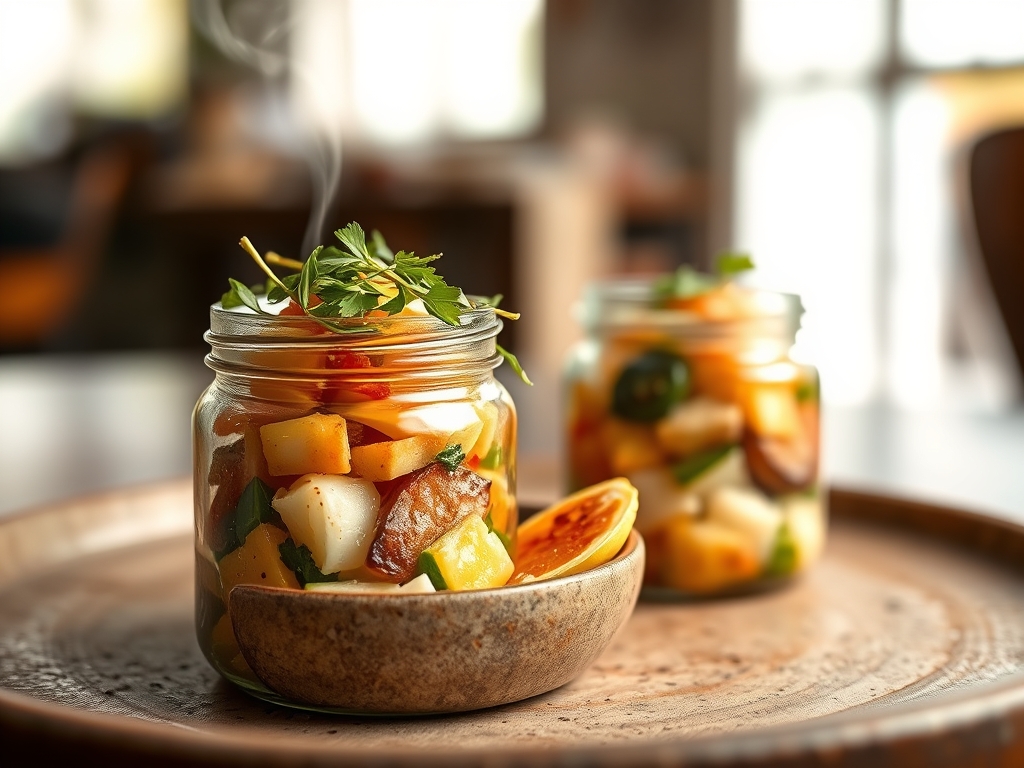
Stop treating your lunch like a chaotic pile of wilted debris and start treating it like a high-performance architectural project. If you are still tossing greens into a plastic container only to find a soggy, oxidized mess by noon; you are failing the basic engineering standards of gastronomy. Welcome to the Mason Jar Salad Audit. This is not about aesthetic "jar-life" trends; it is about the strategic management of moisture migration and structural integrity. We are building a vertical fortress where the viscous dressing acts as a literal moat, protecting your crispest assets from the inevitable decay of osmotic pressure. Imagine the snap of a chilled radish, the buttery yield of a perfectly ripe avocado, and the sharp, piquant bite of a lemon-tahini emulsion, all preserved in a vacuum-sealed glass silo. This audit demands precision in layering to prevent the dreaded "soggy leaf syndrome." We are optimizing every cubic centimeter of that vessel to ensure that when you finally invert that jar, the result is a masterpiece of texture and thermal stability.
THE DATA MATRIX
| Metric | Specification |
|---|---|
| Prep Time | 25 Minutes |
| Execution Time | 10 Minutes |
| Yield | 4 Units (32 oz Jars) |
| Complexity (1-10) | 3 |
| Estimated Cost per Serving | $4.25 USD |
THE GATHERS
Ingredient Protocol:
- Dressing Base: 120ml / 0.5 cup Extra Virgin Olive Oil.
- Acid Component: 60ml / 0.25 cup Fresh Lemon Juice.
- Emulsifier: 15ml / 1 tbsp Dijon Mustard.
- Hard Aromatics: 100g / 0.75 cup Diced Persian Cucumbers.
- Protective Barrier: 200g / 1.25 cups Chickpeas (rinsed and dried).
- Intermediate Density: 150g / 1 cup Cherry Tomatoes (halved).
- Primary Protein: 300g / 2 cups Grilled Chicken Breast or Firm Tofu.
- The Canopy: 400g / 4 cups Chopped Kale or Romaine Hearts.
- Fatty Accents: 60g / 0.5 cup Toasted Pepitas or Walnuts.
Section A: Ingredient Quality Audit:
If your greens appear limp before they even hit the jar, you have already lost the war. Sub-par raw materials are often the result of cellular dehydration. To fix this, submerge your greens in an ice-water bath for ten minutes to restore turgor pressure; then use a high-speed salad spinner to remove every trace of surface moisture. If your dressing separates into a broken, greasy mess, your emulsion lacks a sufficient bridge. Use a digital scale to ensure your oil-to-acid ratio is exactly 3:1 and whisk in a teaspoon of honey or mustard to provide the necessary surfactants to bind the lipids.
THE MASTERCLASS
1. The Foundation Emulsion
Begin by whisking your dressing directly in the bottom of the jar or in a small saucier for better volume control. Ensure the liquid is viscous enough to stay at the base without climbing the glass walls.
Pro Tip: Use a digital scale to weigh your dressing components. Precise ratios ensure the pH level is high enough to act as a mild preservative for the bottom-layer vegetables without over-marinating them into mush.
2. The Hydrophobic Barrier
Layer in your hardest, most water-resistant vegetables first. This usually includes cucumbers, chickpeas, or blanched carrots. These items can sit in the dressing for days without losing their structural "crunch."
Pro Tip: This layer acts as a physical dam. By using dense legumes or fibrous roots, you prevent the dressing from wicking upward into the delicate leafy greens via capillary action.
3. The Structural Mid-Section
Add your medium-density ingredients like tomatoes, peppers, and proteins. If using grilled chicken, ensure it has been chilled to 4 degrees Celsius before entry to prevent steam from forming inside the jar.
Pro Tip: Use a bench scraper to cleanly transfer chopped proteins from your cutting board to the jar. This prevents bruising the ingredients and maintains the clean lines required for a professional-grade audit.
4. The Leafy Canopy and Seal
Pack your greens tightly at the very top. The goal is to leave as little oxygen as possible in the headspace of the jar to minimize oxidation. Finish with your dry seeds or nuts on the very top to keep them away from all moisture.
Pro Tip: Atmospheric oxygen is the enemy of chlorophyll. By packing the greens densely, you create a micro-environment that slows down the wilting process and keeps the leaves vibrant and crisp.
Section B: Prep & Timing Fault-Lines:
The most common human error in the Mason Jar Salad Audit is "Thermal Contamination." Placing warm, freshly cooked quinoa or chicken into a sealed jar creates a greenhouse effect. The residual heat generates steam, which condenses on the glass and rains down on your greens, turning them into a swampy mess. Always use a rapid-chill method; spread cooked proteins on a sheet tray in a single layer and refrigerate for 20 minutes before assembly. Furthermore, ensure your jars are bone-dry. Even a few drops of rinse water can dilute your dressing and ruin the flavor profile.
THE VISUAL SPECTRUM
Section C: Thermal & Visual Troubleshooting:
Referencing the Masterclass photo, observe the distinct, sharp lines between layers. If your jar looks muddy or the colors are bleeding, your density layering is incorrect. Dull, greyish greens indicate that acid from the dressing has traveled upward; this is a failure of the "Hydrophobic Barrier" in step two. If your chicken looks pale and unappealing, you likely skipped the Maillard reaction during the initial sear. To fix this, ensure your pan is screaming hot before adding the protein to render the fats and create a golden-brown crust. If the tomatoes look shriveled, they were likely over-salted before entry, causing them to weep moisture into the middle of the jar.
THE DEEP DIVE
Macro Nutrition Profile:
A standard 32 oz audit provides approximately 450-550 calories, 35g of protein, 22g of healthy fats, and 12g of fiber. This balance is designed to prevent the post-lunch insulin spike, keeping your cognitive functions sharp for the afternoon grind.
Dietary Swaps:
- Vegan: Replace chicken with extra-firm pressed tofu or tempeh; swap honey in the dressing for maple syrup.
- Keto: Eliminate chickpeas and tomatoes; double the pepitas and add avocado (placed in the middle layer, tossed in lemon juice to prevent browning).
- GF: This protocol is naturally gluten-free; just ensure your Dijon mustard does not contain wheat-based thickeners.
Meal Prep & Reheating Science:
The beauty of the glass jar is its non-porous nature. Unlike plastic, glass does not absorb odors or leach chemicals. To maintain molecular structure, store jars in the coldest part of the refrigerator (usually the back of the bottom shelf). When ready to consume, do not microwave the jar. Shake vigorously to distribute the viscous dressing and invert into a large bowl. This action "aerates" the greens and ensures an even coating of flavor across all textures.
THE KITCHEN TABLE
Why is my salad still soggy after two days?
You likely lacked a sufficient "Barrier Layer." Ensure your chickpeas or cucumbers are stacked high enough to keep the dressing away from the tomatoes and greens. Also, check that your greens were 100% dry before loading.
Can I use creamy dressings in this audit?
Absolutely. Creamy dressings are often more viscous than vinaigrettes, making them excellent anchors. However, they contain dairy or egg, so strict temperature control (under 4 degrees Celsius) is even more critical for food safety.
How do I prevent my fruit from browning?
If adding apples or pears, infuse them with a quick dip in acidulated water (lemon juice and water) before layering. Place them in the middle of the jar, away from the direct oxygen at the top.
What is the maximum shelf life for a jar?
When executed with precision, a Mason Jar Salad remains structurally sound for 5 days. The key is the vacuum seal provided by the rubber gasket in the lid; ensure it is tight and free of debris.