Listen to the snap of a cucumber under a carbon steel blade. That sound is the opening bell for a high performance culinary operation. We are not just tossing vegetables in a bowl; we are executing a 10 Minute Greek Salad with the precision of a Swiss watchmaker. Forget the soggy, uninspired heaps of wilted greens found in airport kiosks. This is a technical audit of hydration, acidity, and lipid suspension. We are looking for high contrast textures and a piquant punch that wakes up the olfactory system before the first bite even hits your tongue. The goal is a structural masterpiece where the feta remains creamy but intact, and the tomatoes weep just enough juice to form a natural vinaigrette with the olive oil. This is rapid assembly at its most refined. Speed is the variable, but quality is the constant. If you cannot produce a world class meal in six hundred seconds, your kitchen workflow is suffering from systemic drag. Let us recalibrate your station and optimize for maximum flavor density.
THE DATA MATRIX
| Metric | Specification |
|---|---|
| Prep Time | 6 Minutes |
| Execution Time | 4 Minutes |
| Yield | 4 Servings |
| Complexity | 2 / 10 |
| Estimated Cost per Serving | $3.25 USD |
THE GATHERS
Ingredient Protocol:
- 500g / 1.1 lbs Vine-ripened tomatoes
- 1 large / 300g English cucumber
- 1 medium / 150g Red onion
- 150g / 1 cup Kalamata olives (pitted)
- 200g / 7 oz High-quality sheep milk feta
- 60ml / 4 tbsp Extra virgin olive oil
- 15ml / 1 tbsp Red wine vinegar
- 5g / 1 tsp Dried Greek oregano
- 2g / 0.5 tsp Coarse sea salt
- 1g / 0.25 tsp Freshly cracked black pepper
Section A: Ingredient Quality Audit:
The primary failure point in a 10 Minute Greek Salad is hydrostatic pressure within the vegetables. If your tomatoes feel soft or "mealy," the cellular walls have already begun to collapse. To fix this, submerge them in an ice bath for three minutes to restore turgidity. If your feta is excessively salty or chalky, it is likely a low-grade cow milk imitation. Technical fix: Soak the feta in a small saucier filled with whole milk for ten minutes to leach out excess brine and restore a viscous, creamy mouthfeel. Finally, if your dried oregano lacks aroma, it has oxidized. Rub the herbs vigorously between your palms to infuse the air with essential oils through frictional heat before adding them to the bowl.
THE MASTERCLASS

1. The Geometric Foundation
Utilize a sharp chef knife to dice the cucumbers into 2cm cubes. Consistency is not just for aesthetics; it ensures a uniform surface area for the dressing to coat. Use a bench scraper to transfer the cucumbers to a large stainless steel mixing bowl.
Pro Tip: Keeping the skin on the cucumber provides structural integrity and a bitter contrast to the fatty cheese. The cellulose in the skin acts as a dam, preventing the vegetable from losing moisture too rapidly.
2. The Osmotic Trigger
Slice the tomatoes into wedges and the red onions into paper-thin semi-circles. Add them to the bowl and sprinkle with the sea salt. This initiates osmosis, drawing out the tomato water which will serve as the base for your dressing.
Pro Tip: Use a digital scale to measure your salt. Exactly 1% salt by weight is the "goldilocks zone" for vegetable seasoning, enhancing flavor without causing the greens to wilt prematurely.
3. The Lipid Emulsification
Drizzle the extra virgin olive oil and red wine vinegar directly over the vegetables. Add the olives. Use a large spoon to gently fold the ingredients. You are looking to create a temporary emulsion between the oil and the piquant tomato juices.
Pro Tip: Do not over-mix. You want to aerate the mixture slightly, ensuring the oil remains viscous rather than becoming a heavy, greasy film at the bottom of the vessel.
4. The Feta Integration
Place the block of feta on a clean cutting board. Instead of neat cubes, use your hands to break it into irregular, large crumbles. This creates more "nooks and crannies" for the oregano and pepper to adhere to.
Pro Tip: Professional chefs often use a saucier to slightly warm the olives before adding them. This helps render a small amount of their flavorful oils, which then permeates the entire salad.
5. The Final Seasoning
Top the salad with the dried oregano and black pepper. Give it one final, very gentle toss. The feta should remain on top to prevent it from dissolving into a greyish paste from the vinegar acidity.
Pro Tip: Use a microplane or a fine grater to zest a tiny amount of lemon over the top at the very end. The citric acid provides a high-frequency brightness that the acetic acid of the vinegar lacks.
Section B: Prep & Timing Fault-Lines:
The most common human error is "Pre-Salting Syndrome." If you salt the cucumbers and tomatoes more than 15 minutes before serving, the salad will transform into a cold soup. To maintain the 10 Minute Greek Salad standard, the salt must only touch the produce moments before consumption. Additionally, temperature control is vital. Serve this on chilled plates. If the salad reaches room temperature, the fats in the feta become too soft and lose their clean finish on the palate.
THE VISUAL SPECTRUM
Section C: Thermal & Visual Troubleshooting:
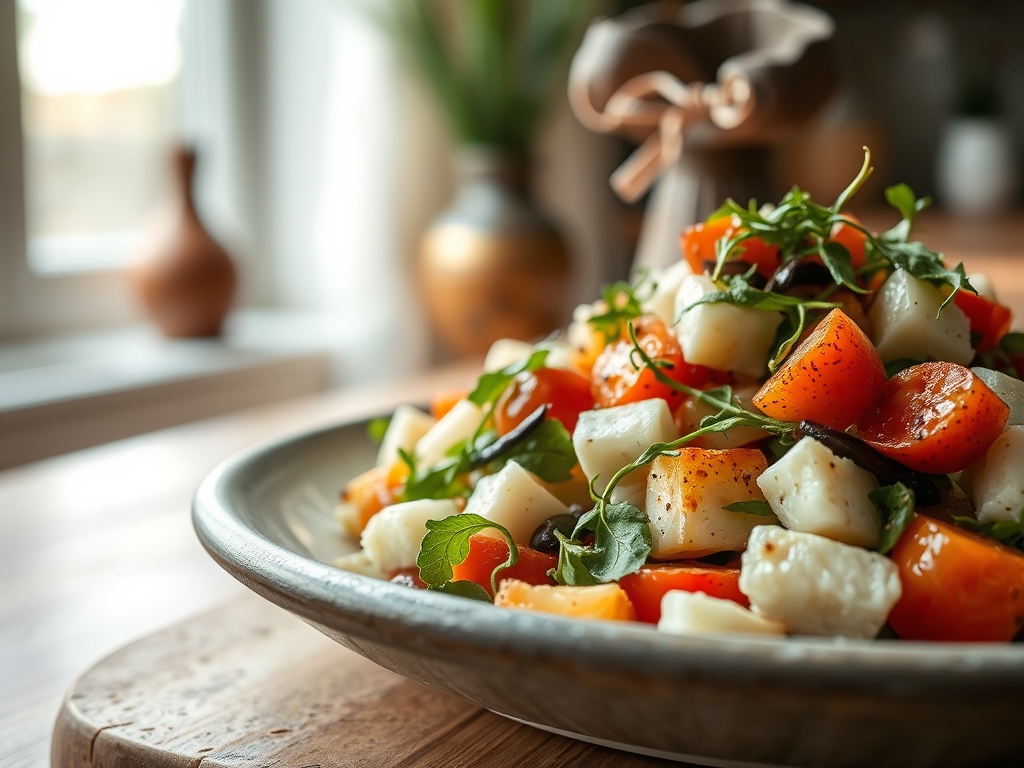
Referencing the Masterclass photo, notice the high-gloss sheen on the olives and the matte texture of the feta. If your salad looks dull, you have likely under-dressed it or used a low-quality oil that has been absorbed by the vegetables. If the colors look muted, your vinegar may be too old or you have over-handled the red onions, causing their anthocyanins to bleed and stain the cheese pink. The goal is a vibrant "technicolor" effect where each ingredient maintains its distinct visual identity. If the tomatoes look pale, they lack lycopene; a dash of smoked paprika can mimic that deep red hue and add a subtle earthy note.
THE DEEP DIVE
Macro Nutrition Profile
This assembly is a powerhouse of healthy fats and micronutrients. Per serving, expect approximately 280 calories, 22g of fat (mostly monounsaturated from the oil and olives), 8g of carbohydrates, and 6g of protein. It is a low-glycemic index option that provides sustained energy without an insulin spike.
Dietary Swaps
- Vegan: Replace feta with a fermented cashew-based cheese or extra-firm tofu marinated in lemon juice and nutritional yeast.
- Keto: This recipe is inherently keto-friendly. Increase the olive oil ratio for higher fat macros.
- Gluten-Free: Naturally GF. Ensure your vinegar is a distilled variety to avoid cross-contamination.
Meal Prep & Reheating Science
Do not reheat this dish. Molecularly, the heat will break the emulsion and turn the cucumbers into a mushy, unappealing mess. For meal prep, store the "wet" ingredients (tomatoes, cucumbers, onions) separately from the "dry" ingredients (feta, oregano). Combine and dress only at the point of consumption to maintain the crisp cellular structure.
THE KITCHEN TABLE
Can I use bottled dressing?
Negative. Bottled dressings contain stabilizers and gums that coat the tongue, masking the fresh piquant notes of the vegetables. The 10 Minute Greek Salad relies on the chemical reaction between fresh oil and tomato acids.
Why is my feta turning into mush?
You are likely over-mixing. Feta is a delicate protein structure. Use a folding motion rather than a stirring motion. If using a lower-quality feta, keep it in larger chunks to compensate for its structural weakness.
How do I take the "bite" out of the onions?
If the red onions are too aggressive, soak the slices in cold water for five minutes then pat dry. This leaches out the sulfurous compounds while keeping the onion crisp and vibrant.
What is the best olive variety?
Kalamata is the gold standard for its briney, fruity profile. Ensure they are pitted to prevent dental emergencies during high-speed consumption. If unavailable, a Castelvetrano olive offers a buttery, milder alternative.