Stop treating your lunch like a low priority chore and start treating it like a high stakes structural engineering project. We are dealing with the 5 Minute Caprese Salad; a masterpiece of moisture equilibrium and lipid distribution that requires more than just a knife and a prayer. If you think this is just throwing cheese at tomatoes, you are fundamentally miscalculating the physics of the plate. We are looking for the perfect tension between the viscous olive oil and the cellular integrity of a vine ripened fruit. The goal is a sensory explosion where the piquant bite of fresh basil cuts through the creamy density of buffalo mozzarella. This is not a snack; it is an infrastructure audit of your pantry. You have three hundred seconds to achieve a state of gastronomic grace. Every second counts when you are managing the delicate balance of acidity and fat. If the tomatoes are too cold, the aromatics stay locked in their skins. If the cheese is too dry, the mouthfeel is catastrophic. Prepare for a total system overhaul.
THE DATA MATRIX
| Metric | Specification |
|---|---|
| Prep Time | 3 Minutes |
| Execution Time | 2 Minutes |
| Yield | 2 Servings |
| Complexity (1-10) | 2 |
| Estimated Cost per Serving | $4.50 |
THE GATHERS
Ingredient Protocol:
- 450g / 1 lb Heirloom Tomatoes (Assorted colors for visual variance)
- 225g / 8 oz Fresh Mozzarella di Bufala (Stored in brine)
- 30ml / 2 tbsp Extra Virgin Olive Oil (Cold pressed, high polyphenol count)
- 15ml / 1 tbsp Aged Balsamic Glaze (High viscosity)
- 15g / 0.5 oz Fresh Genovese Basil Leaves
- 5g / 1 tsp Maldon Sea Salt (Flaky texture)
- 2g / 0.5 tsp Freshly Cracked Black Peppercorns
Section A: Ingredient Quality Audit:
The primary failure point in a 5 Minute Caprese Salad is the "refrigerated tomato syndrome." Cold temperatures destroy the enzyme responsible for flavor volatiles; if your tomatoes are chilled, the salad will taste like wet cardboard. To fix this, submerge cold tomatoes in 30 degree Celsius (86 degree Fahrenheit) water for five minutes to infuse them with some semblance of life. Furthermore, if your mozzarella is rubbery, it likely lacks the necessary moisture content. Ensure you are purchasing mozzarella packed in liquid. If you find your basil is wilting or turning black, it is likely due to oxidation from a dull blade. Always hand tear or use a ceramic knife to maintain the cellular structure and prevent the leaves from bruising.
THE MASTERCLASS
Step-by-Step Execution:
1. The Geometric Foundation
Slice your heirloom tomatoes into 1cm rounds using a high carbon steel serrated knife. Use a digital scale to ensure uniformity; consistency in thickness ensures that each bite has the same ratio of acidity to sweetness. Arrange them in a circular pattern on a chilled ceramic platter to provide a heat sink that keeps the ingredients crisp.
Pro Tip: Uniform slicing isn't just for aesthetics. It manages the surface area to volume ratio, ensuring the salt can render out just enough moisture to create a natural "jus" on the plate without making the dish soggy.
2. The Lipid Integration
Drain the mozzarella and pat it dry with a lint free lint cloth. Use a bench scraper to portion the cheese into segments that mirror the diameter of your tomato slices. Intersperse the cheese between the tomato rounds. This creates a structural "shingle" effect that prevents the salad from collapsing during transport.
Pro Tip: Removing surface brine from the cheese allows the olive oil to adhere to the surface. If the cheese is too wet, the oil will simply slide off and pool at the bottom of the dish, ruining the emulsification of flavors.
3. The Aromatic Deployment
Hand tear the basil leaves rather than chopping them. This preserves the essential oils within the leaf rather than leaving them on the cutting board. Scatter the leaves over the tomatoes and cheese, ensuring every "shingle" has a green component.
Pro Tip: Tearing creates irregular surface areas which allow more aromatic compounds to aerate and reach your olfactory sensors before the first bite.
4. The Final Calibration
Drizzle the olive oil in a steady stream, followed by the balsamic glaze. Finish with a precise dusting of Maldon salt and cracked pepper. Use a saucier spoon if you require surgical precision with the balsamic application.
Pro Tip: Seasoning from a height of 12 inches ensures an even distribution of salt crystals. This prevents "salt pockets" and ensures the salinity acts as a universal flavor enhancer across the entire structural matrix.
Section B: Prep & Timing Fault-Lines:
The most common human error is the "Early Salting Trap." If you salt the tomatoes more than five minutes before serving, osmosis will draw out too much water, turning your salad into a soup. The structural integrity of the dish relies on the salt being added at the very last second. Another timing error involves the balsamic glaze. If you use a thin balsamic vinegar instead of a thick glaze, it will bleed into the cheese, turning the pristine white mozzarella a muddy brown. Always check the viscous nature of your reduction before application.
THE VISUAL SPECTRUM
Section C: Thermal & Visual Troubleshooting:
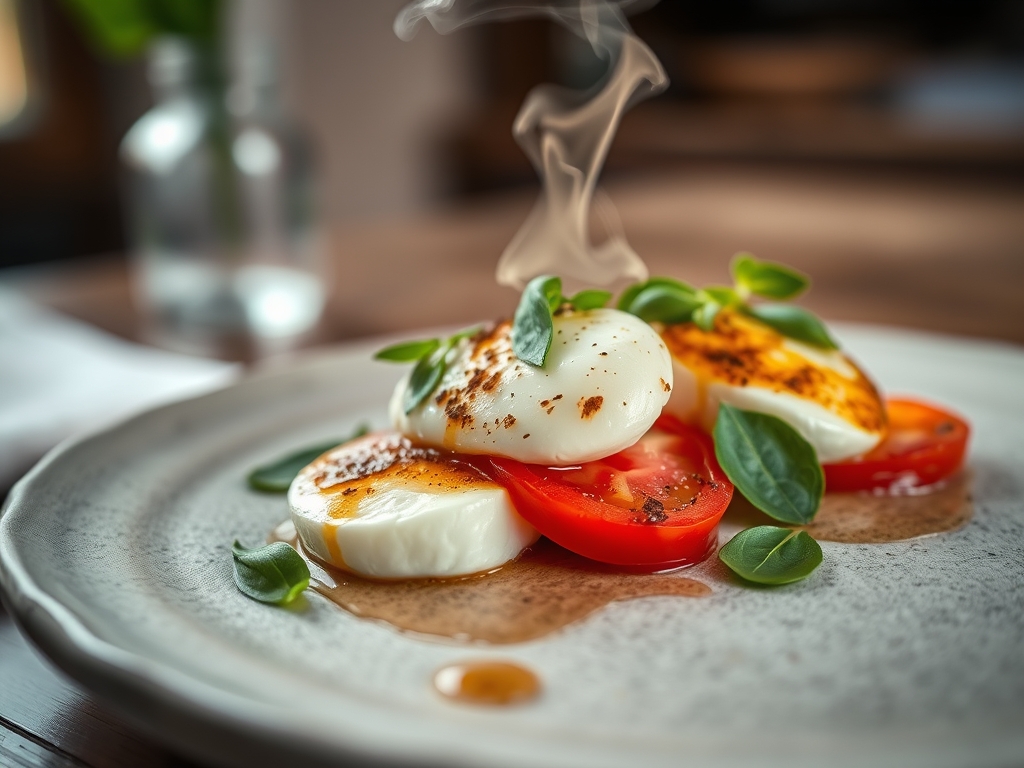
Referencing the Masterclass photo, notice the high contrast between the deep reds of the tomatoes and the stark white of the cheese. If your salad looks "flat," you are likely lacking color variance. Use a mix of yellow and purple heirlooms to break the visual monotony. If the oil looks greasy rather than shimmering, you have over poured. The oil should bead on the surface of the tomato like dew on a leaf. If your basil appears dark or "melted," it has reacted with the acid in the tomatoes for too long. This is a sign that your 5 Minute Caprese Salad sat on the counter for 20 minutes instead of being consumed immediately. Speed is the essence of vibrancy.
THE DEEP DIVE
Macro Nutrition Profile
A standard serving contains approximately 280 calories. The breakdown is roughly 22g of fats (primarily monounsaturated from the olive oil), 15g of protein from the buffalo mozzarella, and 8g of carbohydrates. It is a high density, nutrient rich profile that favors lipid based energy.
Dietary Swaps
For a Vegan conversion, replace the mozzarella with a cashew based cultured nut cheese to maintain the creamy mouthfeel. For Keto enthusiasts, double the olive oil and omit the balsamic glaze to reduce the sugar count. The dish is naturally Gluten-Free, provided your balsamic glaze has no thickening agents derived from wheat.
Meal Prep & Reheating Science
Do not reheat this dish. The molecular structure of fresh mozzarella becomes rubbery and unappealing when exposed to microwave radiation. If you must prep in advance, store the sliced tomatoes and cheese in separate airtight containers. Combine and season only at the moment of consumption to prevent the breakdown of the tomato cell walls.
THE KITCHEN TABLE
Can I use dried basil if fresh is unavailable?
Absolutely not. Dried basil lacks the volatile oils and "green" notes required to balance the fats in the cheese. It will provide a gritty texture that compromises the entire infrastructure of the salad.
What is the best oil for this salad?
Look for an "Early Harvest" Extra Virgin Olive Oil. These oils have a higher polyphenol count, providing a peppery finish that acts as a secondary seasoning for the tomatoes.
Why is my balsamic glaze sinking?
Your glaze likely lacks the density of a true reduction. If it is too thin, it cannot overcome the surface tension of the olive oil. Simmer your balsamic in a saucier until it coats the back of a spoon.
Does the size of the salt matter?
Yes. Table salt is too fine and will dissolve instantly, making the dish taste "salty" rather than "seasoned." Flaky sea salt provides a textural crunch that contrasts with the soft cheese.