Stop treating your root vegetables like a side dish afterthought and start respecting the complex biological engineering happening beneath that dusty, copper skin. We are not just cooking; we are orchestrating a massive structural collapse of complex starches into a pool of molten, sugary bliss. When you commit to the process of crafting Baked Sweet Potatoes, you are engaging in a thermal negotiation with the amylase enzymes that reside within the tuber. These enzymes are the silent architects of flavor. At specific temperature windows, they dismantle long-chain polysaccharides into maltose, creating a natural syrup that no bottled glaze can replicate. The smell alone is a chemical siren song of caramelization and earth. We want skins so crisp they shatter like parchment and interiors so aerated and plush they defy the density of their raw state. This is high-stakes starch management. If you fail to respect the moisture migration, you end up with a soggy, fibrous mess. If you master the thermal curve, you produce a masterpiece of culinary infrastructure.
THE DATA MATRIX
| Metric | Specification |
|---|---|
| Prep Time | 10 Minutes |
| Execution Time | 45 to 60 Minutes |
| Yield | 4 Servings |
| Complexity (1-10) | 2 |
| Estimated Cost per Serving | $0.85 |
THE GATHERS
Ingredient Protocol:
- 4 Large Jewel or Beauregard Sweet Potatoes (approx. 1.2kg / 2.6 lbs)
- 30ml / 2 tbsp Extra Virgin Olive Oil
- 15g / 1 tbsp Flaky Sea Salt
- 60g / 4 tbsp Unsalted Grass-fed Butter
- 5g / 1 tsp Freshly Cracked Black Peppercorns
- 10g / 2 tbsp Fresh Chives, finely minced
Section A: Ingredient Quality Audit:
The primary failure point in tuber selection is the presence of "pithy" or woody cores. If your raw material feels light for its size, it has likely suffered moisture loss during storage, leading to a fibrous interior that will never truly render into a creamy texture. To fix a subpar batch, you must introduce a steam-injection environment. Wrap the offending tubers in foil with a teaspoon of water to force hydration back into the cell walls before finishing them uncovered to crisp the skin. Furthermore, if the skin shows signs of shriveling, the sugars have already begun to ferment. In this case, peel them entirely and roast the flesh in cubes to maximize the Maillard reaction on the surface area, bypassing the compromised skin altogether.
THE MASTERCLASS
1. Structural Decontamination and Hydration
Begin by scrubbing the tubers under cold running water. Use a stiff-bristled brush to remove all volcanic soil and debris. Pat them dry with surgical precision using lint-free towels. Once dry, use a digital scale to ensure your potatoes are within a 50-gram weight variance of each other; uniformity is the only path to a synchronized finish time.
Pro Tip: Use a fork or a small paring knife to pierce the skin 6 to 8 times. This creates "exhaust vents" for internal steam. Without these, the pressure build-up can cause the tuber to rupture, ruining the aesthetic integrity of the skin.
2. Lipid Coating and Surface Tension
Place the tubers in a large stainless steel bowl or on a clean bench scraper surface. Drizzle with the olive oil and massage it into every crevice of the skin. This lipid barrier serves two purposes: it conducts heat more efficiently than air and it prevents the skin from becoming leather-like during the long roast. Dust generously with sea salt.
Pro Tip: The salt acts as a desiccant, drawing out just enough surface moisture to allow the skin to crisp while the interior remains viscous. Professional chefs often use a saucier to pre-melt the butter with salt to create a seasoned wash, though dry-salting is superior for skin texture.
3. The Thermal Ascent
Place the potatoes directly on the middle oven rack with a parchment-lined baking sheet on the rack below to catch any escaping sugars. Roast at 200C / 400F. This high-heat environment is necessary to trigger the Maillard reaction on the skin while the internal temperature slowly climbs to the 95C / 205F sweet spot where starches fully gelatinize.
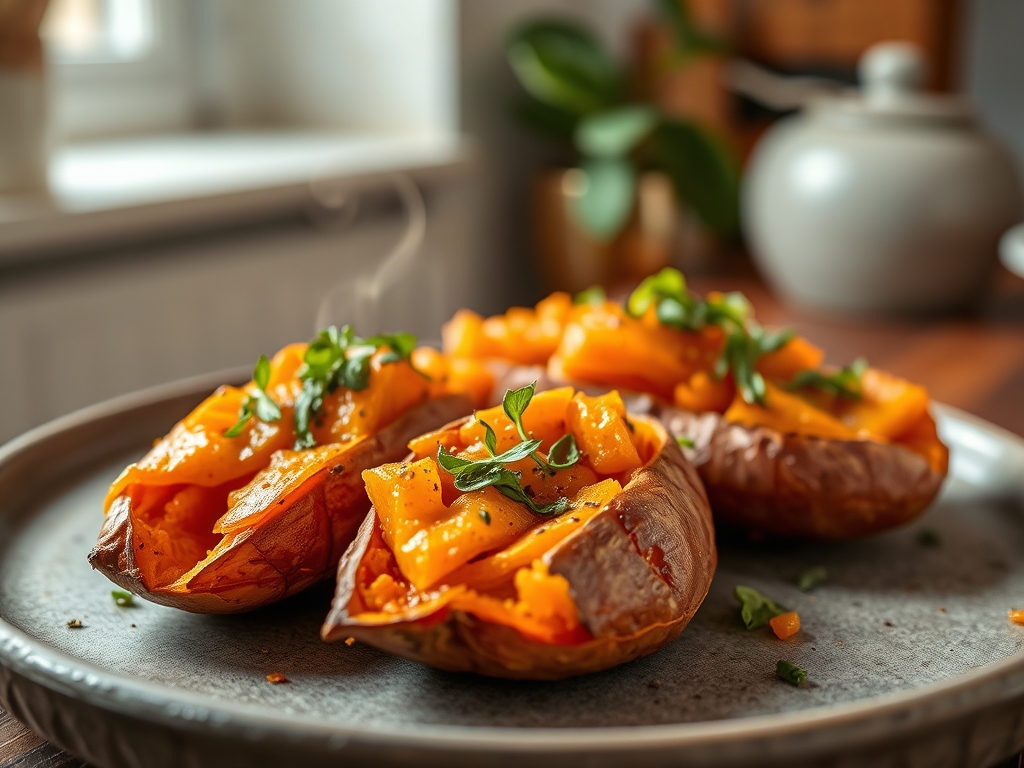
Pro Tip: Do not use aluminum foil to wrap the potatoes. Foil traps steam, which results in a boiled, soggy texture. To achieve the "shattered glass" skin effect seen in the masterclass photo, the tuber must have direct contact with the circulating hot air of the oven.
4. The Structural Breach and Aeration
Once a knife slides into the center with zero resistance, remove the tubers. Immediately slice a longitudinal line down the center. Use a clean kitchen towel to grip the ends and push inward, forcing the orange flesh to bloom upward. This allows the final burst of steam to escape, preventing the interior from becoming gummy as it cools.
Pro Tip: Use a fork to gently fluff the interior flesh before adding fats. This process of aeration increases the surface area, allowing the butter to infuse deeper into the potato rather than just sitting on top in a greasy pool.
Section B: Prep & Timing Fault-Lines:
The most common human error is the "Cold Core" syndrome. If you take your tubers directly from a cold pantry or refrigerator to a hot oven, the exterior will overcook and char before the center reaches the enzymatic activation zone. Always allow your ingredients to reach room temperature before beginning the thermal cycle. If you find yourself behind schedule, do not raise the temperature above 215C / 425F; doing so will burn the natural sugars into a bitter carbon before the interior is soft. Instead, use a digital scale to weigh smaller specimens for a faster turnaround.
THE VISUAL SPECTRUM
Section C: Thermal & Visual Troubleshooting:
Look closely at the Masterclass photo. You should see a distinct contrast between the matte, papery skin and the vibrant, glistening orange interior. If your potatoes look dull or "greyish" inside, you have likely undercooked them, failing to fully convert the starches. If the skin is black and smells of acrid smoke, your oven's calibration is likely off; use an external oven thermometer to verify. If the flesh appears dry and crumbly rather than viscous, the tuber was likely an older harvest with low moisture content. You can rescue this visually by whisking a tablespoon of heavy cream into the center to re-emulsify the flesh into a silky puree.
THE DEEP DIVE
Macro Nutrition Profile:
Baked Sweet Potatoes are a powerhouse of complex carbohydrates and Vitamin A. A single medium tuber provides roughly 100 calories, 2 grams of protein, and 4 grams of fiber. The glycemic index is significantly lower than that of a standard white potato, especially when consumed with a fat source like butter or oil to slow glucose absorption.
Dietary Swaps:
For a Vegan protocol, replace the grass-fed butter with a high-quality coconut oil or an emulsified cashew cream to maintain the richness. For a Keto-adjacent modification, keep the portions small and maximize the healthy fats. This dish is naturally Gluten-Free.
Meal Prep & Reheating Science:
To maintain the molecular structure when reheating, avoid the microwave. The microwave agitates water molecules violently, leading to a "leathery" skin and a collapsed interior. Instead, reheat in a 175C / 350F oven for 10 minutes. This dry heat recrisps the skin and gently re-activates the maltose sugars without overcooking the delicate flesh.
THE KITCHEN TABLE
Why is my sweet potato skin so tough?
You likely skipped the lipid coating or wrapped it in foil. Direct dry heat combined with a thin layer of oil is essential to render the skin into a crisp, edible texture rather than a chewy husk.
Can I eat the skin of the sweet potato?
Absolutely. The skin contains a high concentration of fiber and potassium. When properly cleaned and seasoned with sea salt, it provides a necessary textural contrast to the viscous interior flesh.
How do I know when they are perfectly done?
Use a digital probe thermometer. You are looking for an internal temperature of 95C to 100C (205F to 212F). At this point, the starches have fully broken down into simple, sweet sugars.
Why did my potato leak sticky liquid?
That is a "sugar bleed." As the polysaccharides break down into maltose, the pressure forces the syrup out of the vents you poked. This is a sign of a high-quality, high-sugar tuber.
Does the size of the potato matter?
Size dictates timing. Always group tubers of similar mass together. A jumbo potato will require 20 minutes more than a medium one; mixing them leads to uneven results and a logistical nightmare.